

Those who know me well know I have a deep affection for music. Many other writers share this interest. Natalie Welsh is one of them. She loves music and writing so much that she created a literary magazine that celebrates the fusion of music and storytelling called Syncopation Literary Journal.
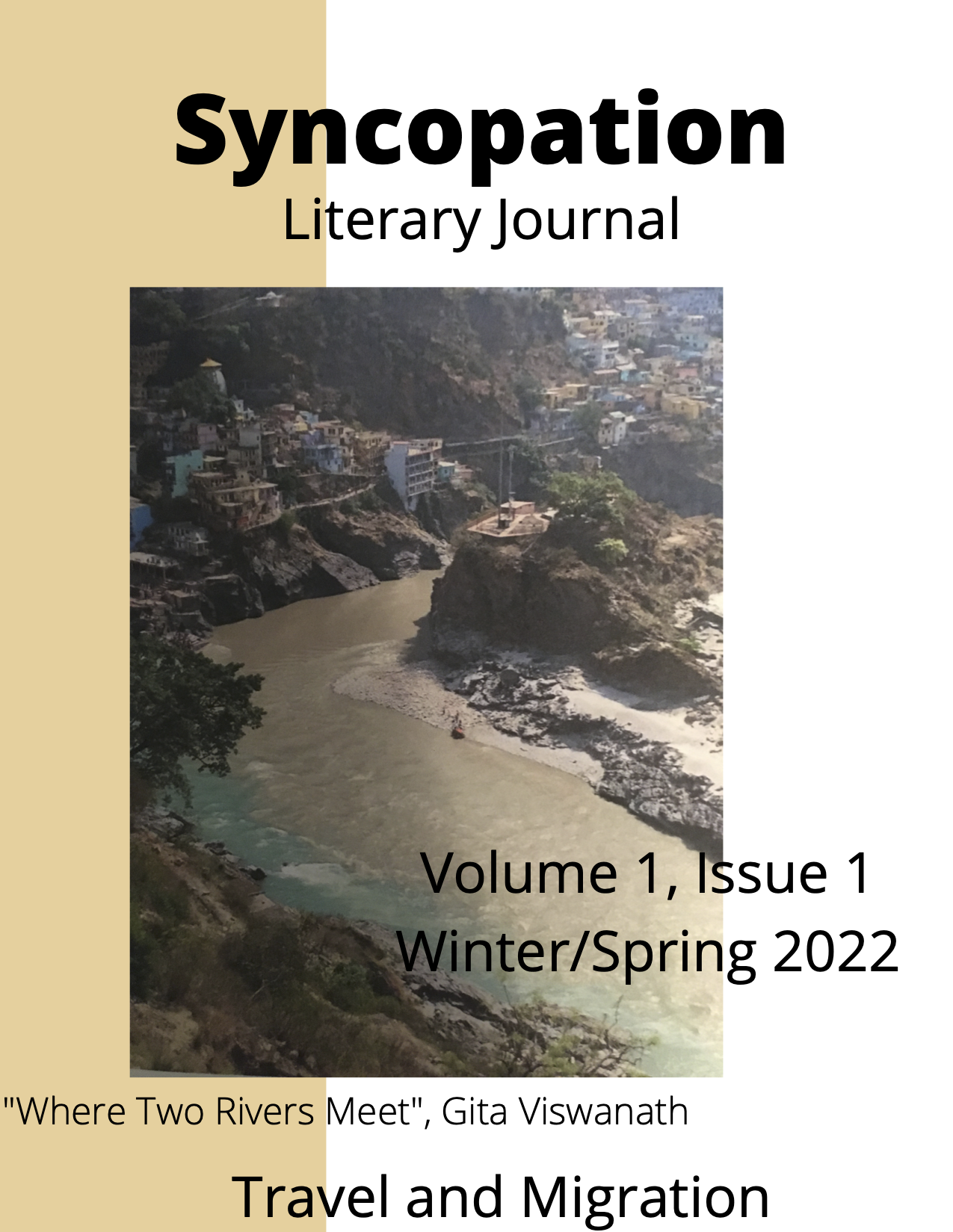
With a Bachelor of Arts in anthropology and a Master of Arts in humanities from York University, Natalie brings a rich academic background to her editorial work. She’s also a multi-talented artist. Both writer and musician, she is proficient on piano and guitar, and has had her short fiction published in New Sociology: Journal of Critical Praxis, Indelible Literary Journal, and Duck Duck Mongoose Magazine. Based in Toronto, Ontario, Canada, Natalie launched Syncopation in 2021 as a platform for musicians and writers to explore the rhythmic interplay between sound and narrative. The first issue went live in January 2022. I was thrilled Natalie saw fit to include my essay “Not Fade Away” in volume 4, issue 1 of her journal, and I’m happy that a couple more pieces I wrote will appear in volume 4, issue 2, later this year.
In this Friday Five, on the final Friday of Women’s History Month, I’m happy to introduce readers to Natalie and her labor of love.
1. What inspired you to create Syncopation Literary Journal, and how did your vision for blending music and literature take shape?
I wanted to create a publication that combined my passion for music with my love of literature. I also wanted to connect with other musicians who write prose.
2. You’ve said that music and storytelling have the power to bring people together. What is it about their intersection that fascinates you so much?
Music and storytelling are universal to people all over the world. While there is so much division—especially given the current political climate—these traditions of music and storytelling can bring people together. Music is a form of storytelling. If we listen to each other’s stories—whether told through music, poetry or prose—we may realize that there is so much that connects humanity. It is a notion that I credit to Harry Belafonte and his powerful song “Turn the World Around.”
3. As a pianist, guitarist, and writer, how do your own musical and literary practices influence each other, and what role do they play in your editorial choices?
I cannot write prose without music. Music and sound are important elements of my prose, whether the characters are listening to music or are musicians. I usually write historical fiction, and I like to listen to music from the era I am writing about for inspiration. I often play an instrument or sing before I can sit down to write something. I believe that musicians have a deep connection with their instrument. Maybe I must get in touch with my musical voice to find my writing voice. As editor of Syncopation Literary Journal, I look for written pieces in which writers connect deeply with music, almost on a spiritual level.
4. Your journal seeks “unique stories that pique a reader’s interest from the opening line.” How do you see this mirroring the unexpected beats of musical syncopation?
In music, “syncopation” may refer to rhythmic emphasis where the listener least expects it. At Syncopation Literary Journal, I welcome the unexpected such as unconventional use of punctuation as a storytelling technique as in Naomi Bess Leimsider’s short story “Natural Causes” from Volume 1, Issue 1. I have also published unorthodox pieces such as Billy Thompson’s Kafkaesque short story “Sandia” in which a musician shows up to her high school reunion as a giraffe. No, not in a giraffe costume, but as an actual giraffe.
5. Are there specific artists, songs, or literary works that have shaped your creative journey and the direction of Syncopation?
As previously mentioned, Harry Belafonte’s “Turn the World Around” has greatly influenced my vision for Syncopation Literary Journal. As a musician, Prince inspired me to learn different instruments, to embrace my voice as a singer, and to explore different genres. The work of diasporic writers such as Min Jin Lee motivated me to explore my ethnic heritage and immigrant roots through my own prose.
TOP PHOTO:: a portrait of the artist as a young girl: three-year-old Natalie Welsh with guitar.
- Follow Syncopation Literary Journal on social media: X/Twitter, BlueSky, Instagram, and Facebook.
- Read this 2022 interview with Natalie in Duck Duck Mongoose Magazine.

 Andrew Careaga
One thought on “Friday Five: Q&A with Natalie Welsh, editor of Syncopation Literary Journal”