
Friday Five: @JimLukaszewski’s personal action plan from #PRSAMDC

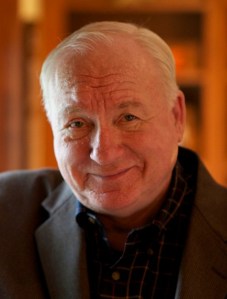
Jim Lukaszewski (photo via www.prsamdc.com)
Jim Lukaszewski (photo via http://www.prsamdc.com)

I’m very glad I was able to attend a portion of the Public Relations Society of America’s 2014 PRSA Midwest District Conference in Springfield, Missouri, on Thursday. I’m especially happy that I was able to hear kickoff keynote speaker Jim Lukaszewski’s terrific presentation on gaining influence. Jim is head of the Lucaszewski group and a big name in the PR and crisis communications fields. He shared a lot of knowledge and great ideas with us today. But the best takeaway of Jim’s talk, for me, was his five-step personal action plan. (And wouldn’t you know it? Those five steps fit perfectly with this blog’s Friday Five format.)

Since Jim so graciously shared his wisdom with us, I don’t think he’d mind my freely passing it along to all of you. It’s a pretty good template that I think would apply to fields outside of PR, marketing, branding and strategic communications. So even if you’re not in the PR, marketing or branding business, you might find Jim’s plan adaptable to your vocation — and/or your life outside of work.

Jim Lukaszewski’s five-step personal action plan

  1. Broaden your interests. In the context of the PRSA conference, Jim asked us to “Broaden your interest beyond the media.” Our organizations’ leaders have broader interests. So should we.
  2. Teach yourself to ask these five questions at the end of every day:
    1. What do I know now that I didn’t know at the start of this day?
    2. What is the most important thing I’ve learned or witnessed today?
    3. What is the most interesting thing I’ve learned or witnessed today?
    4. Who did I help today (and how)?
    5. What new questions came up today that I need to find the answers to?
  3. Teach others. Along those lines, Jim also suggests we find compliment those who learn from us. Beyond that, we should strive to find someone to compliment and write that person a personal, handwritten note. He strives to do this three times per month.
  4. Study leadership. Read biographies or books about leaders who interest you, regardless of their field or discipline. But don’t limit your study to books. Study the leaders around you, including those in your organizations and in organizations you’re affiliated with (as a volunteer, for example).
  5. Do and say things that matter. Jim suggests we learn to moderate the suggestions we make to those who seek our counsel. We should keep our advice “simple, sensible, positive and constructive,” and make sure it helps our leaders achieve their objectives as well as the objectives of our organizations.

A good plan — for work and for life.

Follow Jim Lukaszewski on Twitter at @JimLukaszewki.
Making a spectacle of scientific research

In my 23-plus years in the higher ed PR and marketing business, I’ve had my share of encounters with university researchers that go something like this:

Me: Dr. So-and-so, I heard about your latest research project, and I think it would make a great story to share with the news media. Would you be willing to work with me on a release to share with some reporters?

Professor: I’m not interested in talking to the news media. They never get their facts right and they generalize everything.

Me (pondering the irony of a professor generalizing about the media’s tendency to generalize): Are you sure you don’t want to work with me on this? It’s a great story, and something that the public would be genuinely interested in.

Professor: No thank you.

And so I go on my way to the next potential research story to pitch to science news journalists.

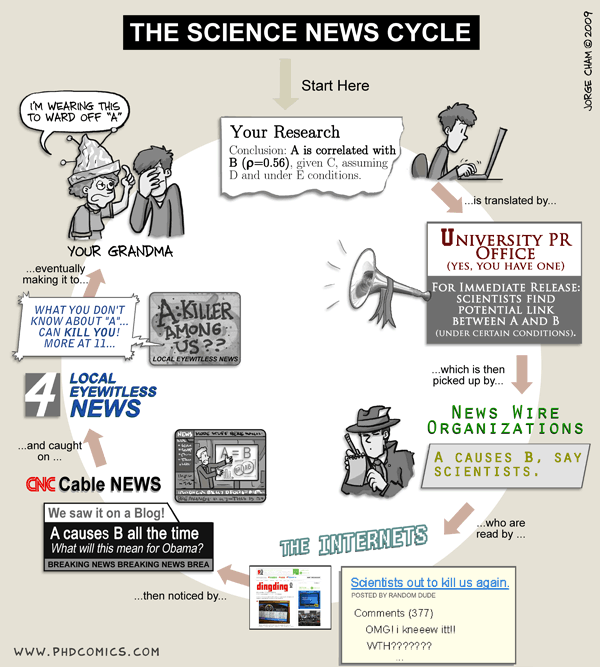
Most researchers are not at all like the ones I describe above. (And of course I’m generalizing here to make a point.) But there are enough of them. And even some faculty who are willing to work with their university’s PR staff are skeptical about the news media’ ability to accurately convey the significance of their research in a series of short paragraphs or sound bites. This Ph.D. Comics cartoon about the science news cycle rings true to many of them.

The science news cycle, according to PhDComics.com

So it’s with mixed feelings that I write about what seems to be two edges of the same media sword in today’s world.

One one edge, we have Neil deGrasse Tyson, a real live scientist (he’s an astrophysicist) and host of the TV series Cosmos: A Spacetime Odyssey. He’s brought the 1980 Carl Sagan program of the same name into a new era, and is making science accessible to a broader audience than Sagan’s PBS series ever did. Over the past several weeks, millions of viewers of Fox (a company not always perceived as friendly toward scientific ideas like evolution and big bang cosmology) as well as National Geographic (a more science-friendly but less mainstream network) have tuned in to hear Tyson explain the mysteries of the universe.

On the other hand, we have two recent, high-profile stunts designed to showcase scientific advances. Both fell flat, for different reasons — and that raise the question of whether efforts to publicize scientific achievements are becoming too spectacular.

Wired reported on these two events on Friday. “It’s been a wacky week in science,” wrote Wired‘s Greg Miller. “First there was that computer that supposedly passed the Turing test, a 50-year old benchmark in artificial intelligence research. Then, yesterday (Thursday), a 29-year-old paralyzed man in a robotic exoskeleton took the opening kick in the World Cup in Brazil.

In both cases, the researchers behind the demonstrations have made grand claims about their importance as scientific breakthroughs. And in both cases critics have complained that they’re little more than publicity stunts. The Turing test chatbot didn’t look so great under closer scrutiny, and the long-awaited exoskeleton demo turned out to be a lot less dramatic than what was initially promised, at least judging by what was shown on TV.

All of which raises the question: Are spectacles like this bad for science? Or can taking science out of the lab and into the limelight serve a greater purpose?

Wired asked Hank Greely, a Stanford law professor who specializes in bioethics, to share his opinions on the matter. If you’re really interested in this topic, you should read the entire interview (it won’t take long). But the main takeaways for me are that:

1. Spectacles aren’t all bad. “When they attract public attention in a positive way, they can help build support for science in two ways. They can build political support among the masses, and they might spark some people to learn more or even go into science.” (Just be sure your science — or engineering — is working before you attempt the spectacular. I recall an incident in which a robot designed and built by students from the University of Pennsylvania was picked to throw out the first pitch of a Phillies game and fell short.)

2. Researchers need to share their stories. I agree with Greely here when he says: “In general I wish scientists paid more intention to communicating with the rest of world. Some of that is talking to journalists or serving as expert witnesses, and some of it is thinking up ways to publicize and dramatize the cool stuff you’re working on. Science needs to toot its own horn because it’s under threat.”

Our role, as PR and marketing professionals, is to help the researchers tell those stories. We just need to make sure we don’t make a spectacle of ourselves or our institutions in the process.