
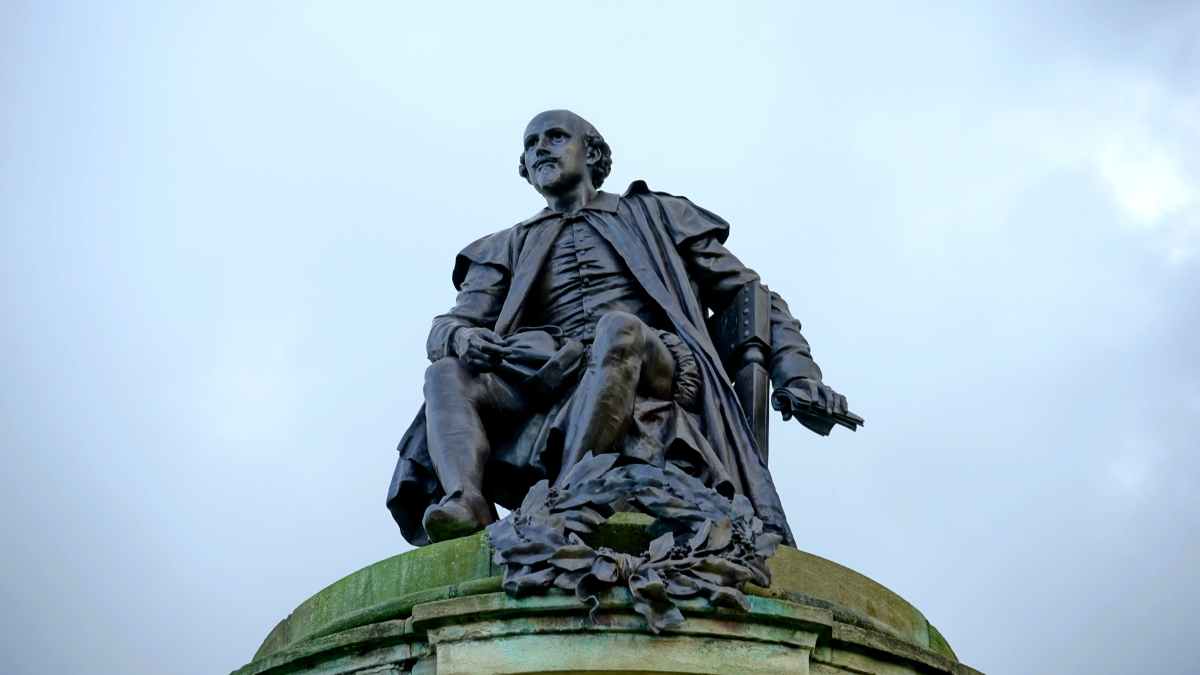
(With apologies to Shakespeare.)
Better is the end of a thing than the beginning thereof.
Ecclesiastes 7:8
I have several writing projects underway. A good many of them are in the phase of what I would call “a good start.” Too few of them are anywhere near the finish line.
New beginnings are exciting. I learned this in my years as a marketer in higher education. Academics love to begin new degree programs. Marketers like to begin new campaigns.
But getting from the ideation phase to the execution phase of any project — ay, there’s the rub. (Sorry again, Shakespeare.)
Slog, craft, or splash?
This step in the creative process — this move from brilliant idea! to getting stuf done — is what Rick Rubin calls “the Craft phase.” Too often, I think of it as the slog phase. Too often I’m John Bunyan, trundling through the Slough of Despond in The Pilgrim’s Progress. I should be lighter on my feet instead.
In The Creative Act: A Way of Being, Rubin acknowledges my perspective.
“In some ways, the Craft phase is one of the least glamorous parts of the artist’s job,” Rubin writes. “There is creativity involved, but it often carries less of the magic of exploration and more of the labor of brick-laying.
“This is the point in the journey where some struggle to carry on. For now, we need to look away from the open field” — the world of endless possibilities — “and turn toward a winding staircase a hundred stories tall. A long, precarious climb lies ahead.”
Yikes. Not scary at all, Rick. Thanks for the encouragement.
Although the process of completing a project can be daunting, Rubin suggests we look at it as another opportunity to play.
So instead of trundling through the swampy slough, I should become as a child who has discovered a gigantic mud puddle to splash around in, to get myself dirty as I edit, revise, or even try to get the work to a nearly finished state.
The old-fashioned deadline
What I’ve found to help get to the finish line on projects is the old-fashioned deadline. There’s just no way around it. Whether it’s self-imposed or established by a third party — a writing contest, say — deadlines have a way of motivating me.
Maybe this is the result of the conditioning of previous work — first as a journalist, when I had to meet daily and weekly deadlines, then later as a communications person at a university, juggling deadlines of different durations, from daily to quarterly or semi-annually — but knowing there’s a definite date when something is due helps me push a project to the finish line.
Photo by Mike Bird via Pexels.

 Andrew Careaga
For years, I didn’t use deadlines in writing – – unless they were for contest or something, which I had no control over. At some point, I realized I was missing a golden opportunity and started creating deadlines for my writing. I also do a weird method where I will sometimes give myself difficult deadlines to meet to force me to work harder and more frequent. I’ve I’m early or on time, it’s great. If I’m a little over, I don’t worry too much, because it was a dang tight deadline. I usually refer to these as “impossible deadlines.” 😂 But the thrill and sense of accomplishment of meeting them or just barely missing them is excellent.
I’ve always felt the nice thing about deadlines is creating priority. If I have two tasks, one with an upcoming deadline and the other with no deadline, I’m gonna prioritize the one with the upcoming deadline. That’s not procrastination, that’s prioritizing!
When it comes to ideas (especially at the start), I remember when I realized that one good idea isn’t enough. A good story is a plethora of good ideas. It’s easy to see this in film. How many times have we watched a movie and thought it was a great idea but the execution or overall movie just didn’t deliver? That’s because it needed more than that one good idea. I often think about Hitchcock’s Saboteur movie (the American one, yes, he remade his own British movie). The ending of that film has a great idea: a suspenseful scene atop the Statue of Liberty. What a way to end a movie, especially back then. But if that one scene was the only good idea in the whole film, it wouldn’t have worked. I don’t wanna drop spoilers, but there is a lot emotionally happening in the scene because everything has built to that moment for the protagonist. The film is full of good ideas and everything builds to that one good idea at the end.
Thank you for introducing me to the Slough of Despond. I had no idea this metaphorical place was all over literature.