
On her website, L Mari Harris describes herself simply as a “Writer, Reader, Ozarks Dweller.” But like the tales she spins, the simple description is sneakily deceptive. It belies a more complex and nuanced character. As I continue to feature outstanding literary women in this month’s Women’s History Month Friday Five series, I’m delighted to introduce this brilliant creator of short fiction and creative nonfiction to readers.
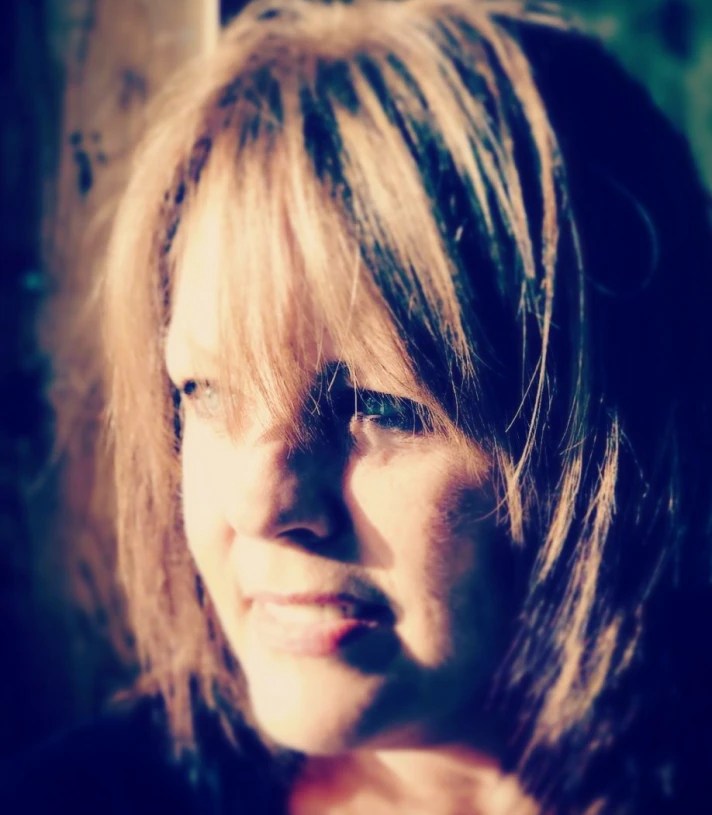
I first got hooked on L Mari’s prose after reading “Baby,” a tiny piece that packs a wallop — one of those stories that sticks with you for a long time. She’s written many other great pieces before and since; find them here.
L Mari is also the managing editor of trampset, a literary magazine you should have on your reading list. Read what she has to say about her writing life, editing trampset, and life in the Ozarks.
1. As managing editor of trampset, what’s the one thing you look for in a submission that makes you say, “Yep, this is it”?
For me, I need a piece to hit the ground running. Emotional investment of the reader is critical. You must immediately show me why I should care. Give the reader enough context to understand the journey you’re taking them on, but refrain from explaining, especially in shorter pieces. Also, avoid that ta-da moment at the end. It’s contrived, and it always falls flat. Strong endings encourage (no, necessitate) the reader to ponder their own understanding of this moment you’ve introduced them to, how they can relate to it within their own life, and how they can see the world in a slightly new light.
2. Your flash and microfiction distill big emotions into tiny spaces. What’s your trickfor cutting the fat without losing the heart?
My first drafts are full of fat. But for me, that’s how I work my way into understanding what I’m hoping to say in a story. The real work comes in the revision process, as I home in on that overall feeling I’m going for. It’s like a moth to flame, as I circle and zip in and out, culling what doesn’t hold up, ruthlessly cutting unnecessary words, sentences, and paragraphs. When I feel like I’m getting close, that’s when I read it out loud. I can’t encourage this step enough because you’ll be surprised what hits you as unnecessary when you take this extra time to listen to what you’ve written. Some stories come easier and go through fewer drafts, but my steps never change to get to that final moment when I say this one’s ready to submit.
3. As a fellow Ozarks dweller, I’m curious about how living in this part of the world influences your work? Who or what — authors, places, oddball moments — sparks your imagination the most?
The Ozarks are full of all-cap CHARACTERS. I never tire of listening in on people’s conversations, or studying how someone walks or gesticulates (if something is particularly interesting, I’ll jot notes on my phone). My husband is an auto tech, andhe’s constantly telling me outrageous coworker stories or the wild stuff he finds in people’s cars. My favorite story is the time he went with a coworker to help him unload something at his house, and a woman walked out of his garage and started heading to the house. The coworker freaked out and ran after her. Turns out it was his girlfriend, who lived in the garage because his ex-wife lived in the house, and the two did not get along. I turned that into a story. How could I not? And I don’t want to sound like a stalker, but I am obsessed with Daniel Woodrell. I know where he lives, but I’ve never driven past his house. I don’t trust myself, ha. That man embodies the voice of the Ozarks for me.
4. You started submitting work later in life after years of quietly writing. What is one piece of advice you’d give writers who may be hesitant to put themselves out there?
If publishing is important to you, you simply have to bite the bullet and do it. My decades in sales toughened me to rejection, so when those rejection emails come in, they don’t phase me at all. Your work will resonate with people, so keep trying.
This is such a subjective business (yes, it is a business, as much as we wish it
wasn’t), so one person’s no is another person’s yes. And self-publishing doesn’t have the negative connotation it once had. I love seeing people self-publish and find success doing so. There are now so many ways to go about putting your work out there.
5. trampset has built a home for eclectic voices. How has that shaped your own storytelling, and what is one risk you’ve taken lately in your fiction?
It helps me see what’s possible. I get in my little ruts, comfortable in ways of telling a story. That’s not good. So reading others reminds me of what we can achieve form-wise, such as telling a story backwards, which is something I’ve never tried before. I also want to use white space more consciously so it holds a heavier weight. Both methods are currently percolating in my head for two different stories I’ve been wanting to tell for a while now.
- Follow L Mari Harris on X/Twitter at @lmariharris or on BlueSky
- Read another five-question interview with L Mari via SugarSugarSalt

 Andrew Careaga