How powerful first lines can draw your reader into your story.
One lesson the professors at journalism school drilled into my head was the importance of crafting a compelling first paragraph (aka the lede in news parlance).
The opening paragraph is the most important element of your story. It must grab readers’ attention and get them to read more, so it must be finely crafted and honed to its sharpest possible point.
The same applies to more literary writing–whether a novel, a short story, or a creative nonfiction essay. These five opening sentences from some recent stories and essays do a good job of hooking the reader. Each example below comes from The Pushcart Prize XLIX: Best of the Small Presses 2025 Edition. And while there are other notable pieces I could have pulled from this anthology, I chose these five because they are great and because you can also read them online, for free.
‘Although they are fiction, I want the stories to seem real, so I am very specific in describing actual places, and I hew closely to what I know.’
In her short story “A Fait Accompli,” which recently won the Short Story Substack award for a story about family, Kate Kinney deftly weaves a poignant and powerful tale of an elderly widow who escapes her assisted-living residence for a holiday shopping spree but cannot escape the control of her power-of-attorney-wielding son nor certain elements of her past. Written in a first-person voice and steeped in realism, “A Fait Accompli” combines detail and seemingly mundane events with a view into the main character’s interior life and memories. The result is a whimsical story that holds the reader’s attention to the very end.
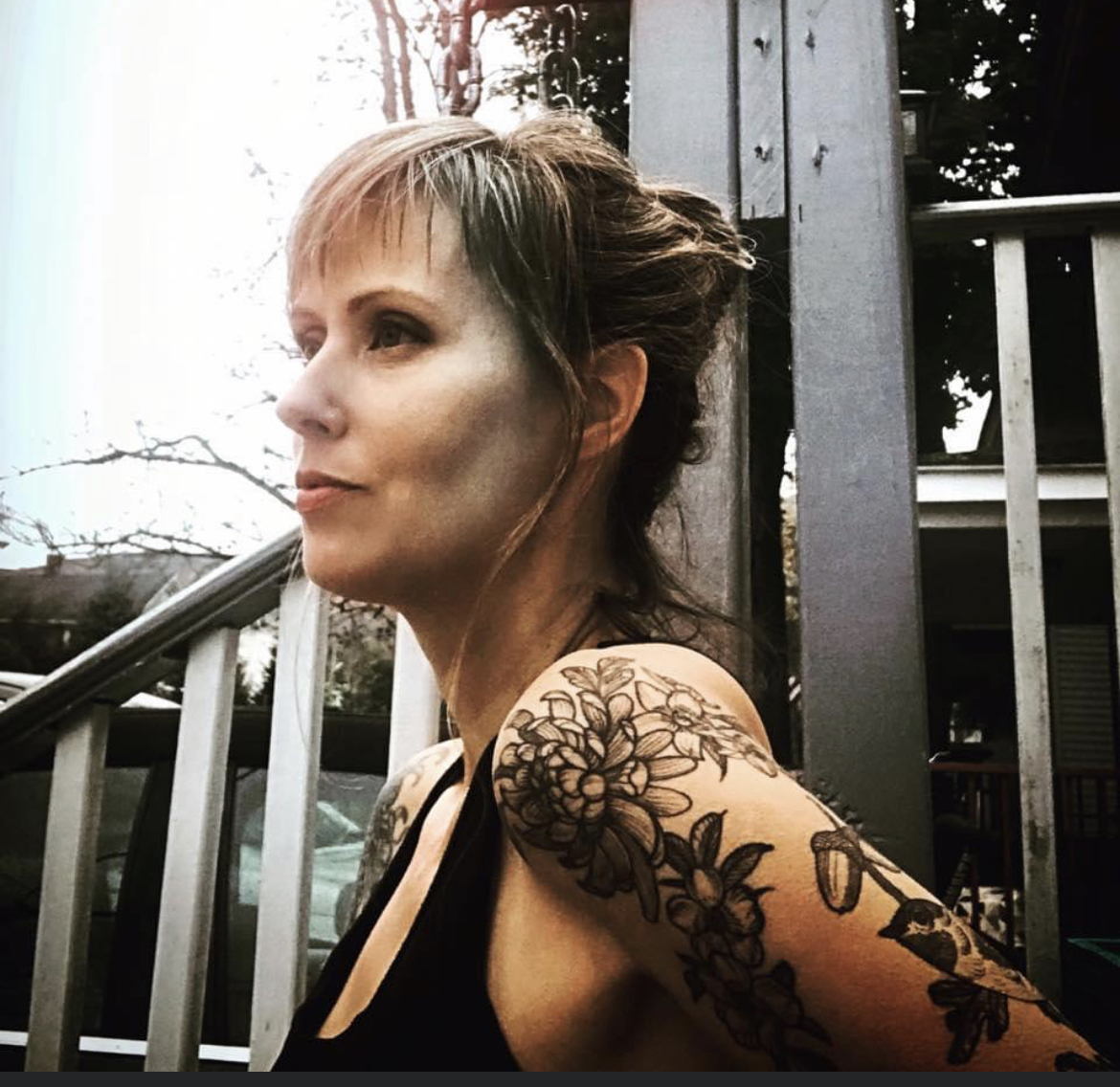
Author and educator Kate Kinney
An educator as well as a writer, Kate chairs the Department of English at Suffolk County Community College in New York, where she also teaches writing and literature. She earned her PhD from the CUNY Graduate Center, where she is a 2025-2026 Writers Institute Fellow, and attended the Kenyon Review Writers Workshop. Her fiction and creative nonfiction have appeared in Meat for Tea: The Valley Review, TheToronto Journal, Superpresent Magazine, The New York Times, and NomadArtX. As a literary scholar, she has studied the influence of another writer named Kate: Kate Chopin. She co-edited the book Kate Chopin in Contexts: From Theory to Practice and is the author of the articles “Kate Chopin: A Woman of and Beyond Her Time” and “Teaching Chopin Through Multimedia.”
Read on to learn how Kate Kinney gleans story magic from the everyday, how her work as a teacher influences her writing, and how binge-watching The Walking Dead informed her favorite essay.


 Andrew Careaga