
H1N1 and crisis communications preparedness

If there’s one silver lining in the H1N1 influenza hype cloud, it could be this: All of the attention is giving campus crisis communications teams an opportunity to review their planning measures.

For the most part, campus crisis communications is a reactive sort of exercise. Something bad happens, and we react to it. We put out the fires as they pop up.

But the H1N1 situation hasn’t been like that for most of us.

For most campuses, H1N1 is a gathering storm on the horizon. We’re getting the opportunity to watch it form, and in the process we’re getting a chance to review our crisis communications plans in order to be best prepared if (or when) the virus hits our communities.

That’s what we’re doing, right? Reviewing our plans, meeting with other team members, coordinating with the campus health services and emergency response staff, keeping the campus community informed of preventative measures and, if we’re fortunate enough to have a pandemic response plan for our campus, reviewing that document as well.

Like Dennis Miller, I have mixed feelings about all the media coverage of this strain of influenza. After all, some 30,000 people in the U.S. die from the flu every year. But we’re not going to take any chances. Plus, maybe the heightened awareness will lead people to do what they should always do to reduce the risk of catching a flu bug.

So, yes, we’re using this time of gathering storm clouds to get our act together to effectively communicate as much as necessary.

Here are a couple of new resources to help us out:

  • When to call a flu day, from Inside Higher Ed, discusses how campuses are and should respond to the threat. Quotes one expert who thinks campuses may be overreacting, but adds that these responses are “a natural reaction for colleges to want ‘to appear to be doing something, to appease fears. Universities have a lot to take into account, not just spread of disease, but also making sure that parents know that their children are being taken care of. And college students are in fact seen by their parents as children.'”
  • The official CDC social media toolkit for H1N1 communications, via Mashable. The CDC has fully embraced social media during this situation. Let’s hope we do, too.
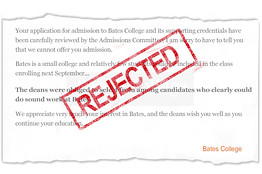
All-American rejection letters

In the world of college admissions, rejection is just part of life. (That’s also true in the world of trying to get a book published, as experience has taught me.)

But these days, in an era of college-bound American teens reared on self-esteem, rejection is a foreign concept, and can be a bitter pill. So, if you’re a high schooler applying for college and you might be on the bubble in terms of academics, or if you’re the parent of such a person, you might want to think about the possible tone of rejection letters that may come your way.

Sue Shellenbarger of the Wall Street Journal offers some guidance in her article Rejection: Some Colleges Do It Better Than Others (hat tip to Julie Wight, aka @socialjulie, who pointed this out in a retweet).

According to Shellenbarger’s “highly unscientific survey of actual letters, student interviews and message boards,” Harvard College offers the kindest rejections. “Despite an estimated admission rate of about 7% this year, this hotly sought-after school sends a humble rejection letter. ‘Past experience suggests that the particular college a student attends is far less important than what the student does to develop his or her strengths and talents over the next four years.'”

Duke also goes easy on those who can’t make the cut. “Undergraduate admissions dean Christoph Guttentag won particular praise from students and parents for the line, ‘I know you will find an institution at which you will be happy; I know, too, that the school you choose will benefit from your presence.’ Says Mr. [Daniel] Beresford, who was one of the 18,000 recipients: “It made me feel like I was a good applicant, not just another rejection.”

The toughest rejection letters came from Bates College in Lewiston, Maine. “The deans were obliged to select from among candidates who clearly could do sound work at Bates,” the letter says. Ouch.

The article includes other categories of rejections, including best spin, most confusing and most discouraging. Then there’s the best student response: “Living well.” Shellenbarger notes that one student, rejected by Harvard and Yale, “posted these words of advice for other rejected candidates on CollegeConfidential.com: ‘When you’re in the dough,” he wrote, “fax the colleges that denied you a copy of your rejection letter every day — letting them know just how badly they screwed up.'”