
Dear President Obama:
I watched your State of the Union Address last night. It was a pretty good one. It could have been much shorter, and your spilled milk joke didn’t go over too well (despite Rep. Jason Chaffetz’s air-rimshot). But I do thank you for placing education, and higher education in particular, so prominently in the national spotlight during your speech.
It encouraged me to hear you call for more job-training programs at community colleges, extending the tuition tax credit and doubling Federal Work Study jobs. These are good programs that can help make college more affordable for students. I was also happy that you asked Congress to hold the line on increasing interest rates on student loans. And as someone who works for a research university, I was thrilled that you called on Congress to spare the ax when it comes to basic research funding.
“Innovation also demands basic research,” you said. “Today, the discoveries taking place in our federally financed labs and universities could lead to new treatments that kill cancer cells but leave healthy ones untouched. New lightweight vests for cops and soldiers that can stop any bullet. Don’t gut these investments in our budget. Don’t let other countries win the race for the future. Support the same kind of research and innovation that led to the computer chip and the Internet; to new American jobs and new American industries.”
Good stuff, that.
But before you got to that research bit, you issued a stern warning to public higher education. You put us “on notice” that the government would not continue to “subsidize skyrocketing tuition.”
You told us:
If you can’t stop tuition from going up, the funding you get from taxpayers will go down. Higher education can’t be a luxury, it is an economic imperative that every family should be able to afford.
Mr. President, we know that you want to increase the U.S. college graduation rate from 40 percent to 60 percent by 2020. We understand that you see higher education as a greater good to society.
But, Mr. President, I have to ask you: How much lower can public funding for this greater good to society go before public higher education becomes more or less privatized, and as a result, becomes exactly that “luxury” you oppose?
Let me give you an example to ponder.
Here in my state, Gov. Jay Nixon gave a similar speech to the Missouri legislature last week, and he sounded many of the same themes as you. He wants Missouri to be more competitive economically, and he wants Missourians to have affordable access to a college education. “In another challenging budget year,” Nixon said, “our top priorities in funding for higher education must continue to be high-quality academic programs and student scholarships.”
But he also said that “to balance our budget in a way that protects our scholarships and academic programs, I am calling on all our colleges and universities to continue to look for more ways to cut overhead and administrative costs and run smarter, more efficient operations.”
What he didn’t say in his speech, but was widely reported by the news media, was that he was presenting a budget that cuts public higher education in Missouri by 12.5 percent.
That would take us back to 1997 funding levels, Mr. President. 1997, when the state of the art of the Internet was the Mosaic browser, and the Pentium II was the new standard for computer processing speed.
Mr. President, we cannot afford as a nation to educate tomorrow’s students at 1997 levels. If we do, where are all of these Class of ’97 graduates going to work in tomorrow’s economy?
I’m not saying we in higher education can’t become more efficient. I think we can. A fellow higher ed blogger, Chas Grundy, also thinks higher education institutions can and should become more efficient.
But I think many colleges and universities are more efficient than you, Mr. Nixon or many other political leaders give us credit for.
Also, if you want cutting-edge research, you’re going to have to allow for some inefficiencies. Experimentation and innovation can sometimes be messy.
At the beginning of your speech, Mr. President, you talked about how you made the tough decision to bail out the U.S. automakers. And how, as a result of that tough, at times unpopular, decision, the U.S. auto industry has made a comeback in the global marketplace.
You say you want U.S. college graduation rates to be the best in the world. But it sounds like you want us to do it on the cheap.
I’m not asking for a bailout of public higher education, Mr. President. We as a nation can’t afford another bailout, even if it makes us No. 1 in whatever.
I’m just asking for support of a public good at a level that will ensure our nation’s students will graduate with the abilities, knowledge and skills they need to make this country great.
God bless you, Mr. President. And God bless the United States of America.
Sincerely,
Andrew P. Careaga
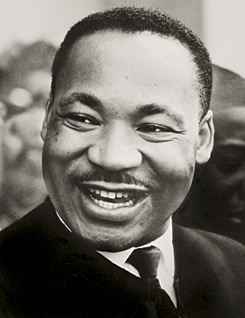 As our nation honors the Rev. Martin Luther King Jr. today with a national holiday, I pause to consider a bit how King’s worldview and moral stance against evil has influenced my own life.
 Andrew Careaga