
Ah, clichés. They are the weeds in our communications garden, are they not? Weed one out and two more spring up in its place,and no amount of pulling seems to ever completely clear the thicket of trite, worn expressions from our patches.
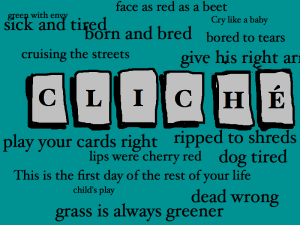
Eventually, we wave our white flags of surrender to the mighty cliché and learn to strike an uneasy truce. Especially when, despite our best efforts to convince clients, supervisors and committees otherwise, those champions of the cliché force them into our copy, print and web designs, video projects and other efforts to clearly tell our institutions’ stories to the world. Sooner or later, we come to the realization that sometimes the fight just isn’t worth it.
Yes, clichés — verbal, visual and virtual — grow and spread faster than kudzu on a Mississippi roadside. And sometimes, trying to fight their presence in our marketing materials seems to be more trouble than it’s worth.
Yet, while we are so adamant about killing clichés in our institutions’ marketing materials, why do we allow them to flourish in our social media lives? (Today’s Friday Five is inspired by a fellow higher ed marketing person whose Twitter bio includes a phrase straight out of a fundraising brochure: “changing lives.”)
We may not have control over every word or image that appears in our campus marketing materials. But we do have control over how we portray ourselves in the social media sphere. Shouldn’t we be more vigilant in that regard? Shouldn’t we try to limited the number of clichés we foist upon our own petards in this realm?
I don’t mind the occasional familiar phrase. But in this world of blogging and social media, what was once a meme can quickly become trite. Here are five social media clichés that I’d love to see less often.
1. Blog posts with numbers in the headline. My Twitter stream and RSS feed runneth over with posts from marketing and tech blogs offering simple numerical solutions. Just in the past several hours, I saw “40 Dead Simple Ways to Get More Comments on Your Blog,” “4 Facebook E-Commerce Tips for Brands,” “5 Fresh Digital Media Trends to Watch,” etc. Sure, it’s easy to slap a number in your headline — and yes, sometimes numbers are effective at getting attention, especially if they’re connected to a simple solution to a perceived problem. But how many of those how-to by the numbers posts actually deliver on their promise? How about trying something a bit more creative for the headline? (My Friday Five posts are the exception to this cliché, of course.)
2. @ creep. Must we put the “@” in front of someone’s name in a blog comment, Facebook comment, or any other forum outside of Twitter? The @name convention belongs on Twitter and only on Twitter. But sometime back in 2008, someone apparently thought it would be cute to include the @ symbol before someone’s name in a blog comment. It isn’t cute. It’s annoying. Please stop.
3. #fail, #win, #winning. The only thing that could make these Twitter hashtags more annoying would be to preface them with the word epic.
4. Worst. Cliché. Ever. The “Best/Worst. [Insert Noun Here]. Ever.” meme jumped the shark with this year’s Super Bowl ads. Please. Stop. It.
5. The curmudgeon blogger. You know the type: Lewis Black wannabes who use their blogs as a forum to complain about trivial matters. They try to be clever snarks but consistently #fail. I’m glad I’m not like that. Worst. Bloggers. Ever.
* * *
What would you add to the list? Please comment below. (No @s though, please.)
 Then I got promoted into a new position. With the new job came added responsibilities, and I had to make some decisions about my level of involvement in certain projects. The magazine was one of them. Reluctantly, I relinquished the beloved editor role to another staff member.
 Andrew Careaga