
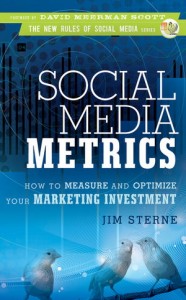
 I was thrilled to discover that a 2008 post from this blog about using delicious.com as a PR measurement tool found its way into a new book about measurement: Social Media Metrics: How to Measure and Optimize Your Marketing Investment, by Jim Sterne. (Mark Greenfield tipped me off to this fact. He just finished reading the book and promises to blog about how Sterne’s ideas apply to higher ed.)
Sterne cites my post in a section called “Are You Noteworthy?” In it, he discusses how organizations can use various social media bookmarking tools — Delicioius, Digg, StumbleUpon, Reddit, etc. — to measure aspects of their social media presence. “The metrics here are refreshingly simple,” he writes:
- How many shared a link to your content?
- How many links have been shared?
- How many people clicked through to it in a given time span?
While I’m very honored that my post made it into Sterne’s book (and — from my PR guy perspective — happy to see our university named there), I’m also pretty surprised. Using Delicious in the manner described in that post was something we just stumbled upon (heh). Actually, a colleague, Mindy Limback (@limbackm), is the one who first suggested that we use Delicious as a sort of electronic clips report for media hits. We use it for that purpose to this day — more so than for measurement. Still, it’s a good measurement tool, and I’m glad Jim found that post noteworthy (and bookworthy).

 Andrew Careaga