
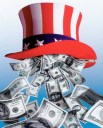
Economic recovery and higher education

If the stimulus package approved by Congress over the weekend is going to work, a good chunk of its success may depend on higher education.

Higher ed figures to play a prominent role in a long-term economic recovery under the provisions of the American Recovery and Reinvestment Act passed by Congress on Friday and expected to be signed into law by President Obama on Tuesday. In the short term, though, the stimulus will consist of infusions of money and tax breaks for individuals: more relief for the unemployed and uninsured, help for first-time home buyers, modest incentives for car purchasers, and some additional tax credits.

But beyond those measures, the stimulus package includes several items that relies on a stronger, longer-term partnership between colleges and universities and state and federal government. If handled wisely, they could help pave the way toward a transformation of our economy.

Last Friday, Inside Higher Ed‘s Doug Lederman analyzed how the economic stimulus package will affect higher education. It’s mostly good news, but public colleges are more likely to be happier with the end result than private institutions, Lederman points out.

Administrators at public colleges and officials in state higher education agencies were probably relieved that the compromise legislation would deliver a total of $53.6 billion in new aid to states over the next two years. … [T]he compromise figure is far higher than the $39 billion that was in the Senate version of the legislation, and $53.6 billion — $39.6 billion of which is designed to fill gaps left by state budget cuts, and $8.8 billion of which is set to go to governors to use for education and other purposes — should go a significant way toward softening the impact of the economic downturn on state colleges and universities.

University research should also benefit from the legislation, which “allots roughly $16 billion to several federal agencies for research grants and facilities over two years, most of which will eventually flow to academic institutions,” Lederman writes. The lion’s share of those funds will go to the National Institutes of Health, National Science Foundation and Department of Energy — three huge funding agencies that, working in partnership with colleges and universities, can help to focus research on areas of national need, like biotech, health and medicine, infrastructure, engineering and science education, and energy and environmental sustainability.

The increase in Pell Grant funding will also help make college more affordable for students, which in turn will lead to a more educated work force and upward mobility.

“If there was bad news in the final stimulus bill,” writes Lederman, “it was probably for officials at private nonprofit institutions.”

Their students will surely benefit from the increased Pell Grants and tax credits, but they had hoped that Congress would increase the limits on unsubsidized loans (as the House had planned to do), and they lost at the last minute nearly $60 million in new capital contributions to the Perkins Loan Program. They were also hardest hit by the Congressional negotiators’ decision to eliminate the separate pot of money ($6 billion in the House bill, $3.5 billion in the Senate) for higher education facilities, which was envisioned to be distributed by the higher education agency in each state.

The compromise stimulus bill wiped out those funds and up to $16 billion for school districts — reportedly in the face of opposition from Sen. Susan Collins of Maine, one of three Republicans whose votes the White House and Senate Democrats desperately needed in order to pass the legislation, which most GOP members oppose as too heavily tilted toward non-stimulative spending rather than tax cuts.

In the final analysis, much more needs to be done to nurse our economy back to health. The banking and investment system needs an overhaul. The automotive industry needs to be retooled, as do many other sectors of our economy in order to be positioned for a transition into a more environmentally sustainable economy. But education must play a role in these sectors, too. For our colleges and universities must provide the kind of holistic education that will prevent future mismanagement — of money, of talents, and of precious natural resources. We must do our part to ensure that “the smartest guys in the room” of our country’s major institutions are managing their resources wisely and ethically.

The Lincoln-Darwin debates

Today marks the 200th anniversary of the birth of two of the modern world’s most revolutionary people. On Feb. 12, 1809, Abraham Lincoln was born in a log cabin in Kentucky. That same date, Charles Darwin was born in Shrewsbury, England. Both men went on to influence our thinking and worldview in dramatic ways.

Lincoln, the Great Emancipator, is the model for all American presidents to emulate. Republicans love to claim they are the “party of Lincoln,” even while Democrats embrace him as the man who released our nation from slavery and brought unity to a fractured and fragmented land. Barack Obama, also hailing from Illinois (the “Land of Lincoln,” as that state’s license plates proclaim), has done much to fashion himself in the image of Lincoln the mythological creation of our collective psyche. But as Christopher Hitchens reveals in a recent Newsweek essay, Lincoln was probably more interested in uniting the republic than in emancipation.

He had sworn a great oath to preserve and protect and defend the Union, and those who underestimated him on this point were to repent bitterly among the ashes of their once-proud oligarchy. He was, at all times and in all places, the president of the United States. He would not concede one inch of Virginia or Texas, and he would not allow himself to rest until the great reunion had been consecrated.

Furthermore, George W. Bush may have had more in common with Lincoln than most of us would care to consider. As Hitchens explains:

If given a blind test and asked which “tyrannical” president had suspended the writ of habeas corpus, closed the most newspapers, arrested the most political rivals, opened and censored the most mail and executed the most American citizens without trial, few students would mention the “Great Emancipator” as the original supremo of big government. But the facts must be faced, as Lincoln faced them. Until the Union itself could be considered safe and whole again, the Constitution—written for the entire Union and, in a sense, representing it—did not really apply, even though the president’s “inherent powers” most certainly did.

As for Darwin, the son of a clergyman who became one of the greatest threats to organized religion’s power: he wasn’t the first to describe natural selection or “survival of the fittest,” but he was the first to pull together a lot of evidence and bundle it all into a tidy package now known as the theory of evolution. And while many will forgive Lincoln for his sins against the Constitution during his presidency, since it occurred during a time of national crisis, not many people who hold faith in traditional Christian teachings will forgive Darwin for exposing the fallacies of a literal reading of the creation story from the Book of Genesis.

Darwin’s articulation of an idea has become the cornerstone for scientific discovery, from biology to genetics to cognitive neuroscience. Yet it remains controversial, precisely because it threatens a dogmatic worldview that sees no room for compromise — no alternative to its reading of an ancient text through a modern brain that sees the Genesis story of creation as literal rather than metaphorical. (I live in the heart of the Bible Belt, so perhaps this strikes closer to home for me than it may for some of you.) And so we have courts that rule against teaching evolution in science classes, and an overall politicizing of science.

An editorial in last Sunday’s St. Louis Post-Dispatch pointed out the absurdity of this. “We scarcely can imagine polling people today on their views about Newtonian physics or Einstein’s theory of relativity. But over the past 20 years, Americans routinely have been surveyed about their acceptance of evolution.”

The controversy of evolution “persists, as Darwin himself predicted it would, because evolution was the first explanation for the appearance and diversity of life on Earth that did not rely on the divine,” the Post-Dispatch editorial explains.

For all the furor his work engendered, Darwin’s towering achievement — and, in the eyes of some, his greatest sin — lay in providing a new framework for understanding life.

The real brain-teaser for today is: Which man, Lincoln or Darwin, mattered more? There’s probably no objective, empirical method of determining that. Stephen Conn, a history professor at Ohio State University, takes the middle ground in a Philadelphia Inquirer piece and concludes that “Lincoln and Darwin initiated twin revolutions” that continue to this day.

One brought the Civil War and the emancipation of roughly four million slaves; the other, a new explanation of the natural world. Lincoln’s war transformed the social, political and racial landscape in ways that continue to play out. Darwin transformed our understanding of biology, paving the way for countless advances in science, especially medicine. …

The two revolutions shared a commitment to one proposition: that all human beings are fundamentally equal. In this sense, both Lincoln and Darwin deserve credit for emancipating us from the political and intellectual rationales for slavery.