
We’ve been hearing a lot about the many “disruptive” forces buffeting our world in higher education. We’ve heard about disruptive technology and how online education can radically change delivery of our coursework. Then there’s disruptive innovation, disruptive thinking — even disruptive demographics, all terms that describe the tectonic-shifting forces of change.
Now there’s a new phrase to add to your list: disruptive adaptation, which describes the way higher ed must deal with these forces.
In a recent white paper (pdf) published by The Lawlor Group, Jon McGee, the vice president for planning and public affairs at the College of Saint Benedict and Saint John’s University in
Minnesota, describes disruptive adaptation as the need for colleges and universities to sustain a sort of equilibrium in the face of disruptive forces. McGee describes five key forces of disruption — changing demographics, lingering high unemployment, stagnant family income levels, home values, and changes in family debt and savings — and suggests a new framework for moving forward during these turbulent times. His “decision cube” provides a tool for looking at disruptive adaptation and developing an approach for the future.
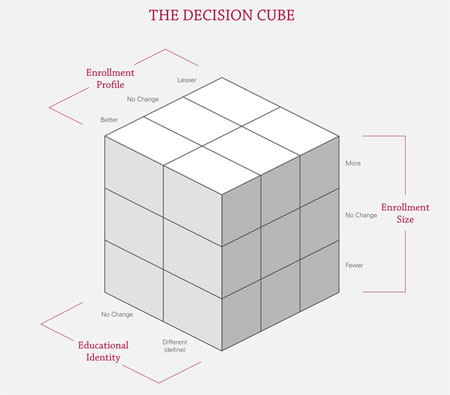
If you haven’t yet done so, I suggest you read McGee’s paper, “Disruptive Adaptation: The New Market for Higher Education,” available for download from this post on The Lawlor Group’s blog.
 Andy writes!