
 Gizmodo probably won’t pick up on this story about how I may have scored a free beef product via Twitter. After all, the tale doesn’t have quite the sizzle as the one Gizmodo shared about how Peter Shankman got a free steak thanks to something he posted on Twitter.
But I still think my story is still worth sharing, if for no other reason than to let you know that:
- you don’t have to have 100,000 Twitter followers to get food from restaurants on Twitter, and
- you don’t have to tweet jokingly to score the promise of free food, either
But you should know that it isn’t always easy. And maybe you shouldn’t even try.
Before I begin my tale, I shall briefly recount Shankman’s. Shankman, a well-known social media maven (and also apparently an angel investor, according to Gizmodo), was about to fly to Newark from Tampa when he jokingly sent out a tweet to @mortons (Morton’s Steakhouse) that he’d love to have a juicy porterhouse awaiting him when he arrived.
Guess what happened? He got off the plane and discovered a tuxedoed Morton’s waiter who was holding a bag containing a 24-ounce porterhouse steak, shrimp, potatoes, bread, the works. The dinner had been delivered to Shankman from the Morton’s Steakhouse in Hackensack, N.J.
It’s really a remarkable tale of exceptional customer service as customer relationship management. Anyone involved in social media should read Shankman’s complete blog post as a case study. Even though he has 100,000 followers, it’s pretty obvious that the folks at Morton’s are focused on delighting their customers, and use social media as an element in that effort.
Now, on to my own story:
It was another weekend in which my wife and I were hanging out in a hospital room with her mother, who was recovering from heart surgery and further complications, including stroke and paralysis from her thoracic region down. We’d spent many weekends over the summer at my mother-in-law’s bedside. Since this facility didn’t have a full-service cafeteria open on weekends, on many a Saturday or Sunday I would usually make a run to a nearby restaurant, typically a fast food joint, to pick up breakfast for my wife and me. (Not the healthiest thing to do, but convenient.)
On this particular Sunday, I went to a nearby Hardee’s drive-through. When I got back to the room, I noticed that part of my wife’s order was missing.
Normally, I would not make a huge deal out of it. It wasn’t the first time Hardee’s had screwed up an order of mine, and I’m sure it won’t be the last. (Usually I check the bag before I drive off but this time I forgot to do that.)
But this was not a normal day. My mother-in-law was awake for much of the night and, consequently, so were we. My wife and I were both tired and irritable. It felt like nothing was going right with life, and the fact that our order was missing hash rounds — greasy little fried potatoes that may have brought just a bit of comfort that morning — just added to that lousy feeling that life was out of control, that nothing was going right.
So I did what any other Twitter junkie would do: I tweeted about my plight to the corporate @hardees account.
It wasn’t a nasty tweet. All I posted was:
Thanks, @hardees on Glenstone in Springfield, for skipping the medium hash rounds on my to go order this am. Wife didn’t need ’em anyway.
A bit snarky at the end, I guess, but not vitriolic. Just a tweet to get the point across that I was disappointed. (I was also a bit rattled, as the Hardee’s I went to that day was on Battlefield, not Glenstone. But still.)
So, guess what I got from @hardees?
Silence.
@hardees did not respond to my tweet.
I’ve got to say I was a little bit disappointed. I’m not one of those people who frequently complain to brands in order to get free stuff or special treatment. And of course, the people running the @hardees Twitter account had no idea what kind of morning I was having, any more than the kid at the drive-through window did.
But that’s kind of the point, isn’t it? We don’t always know what kind of a day the people are having that we deal with. Shouldn’t we, all of us, do what we can to try to make their day a little bit better? When someone uses a social media tool to gripe at a brand, yes, he or she may be a chronic complainer. But he or she also may be someone who really needs someone to express concern, care and own up to a screw-up.
Anyway, so @hardees didn’t reply. So I let it go. That is, until I read about Morton’s exceptional treatment of Shankman. After reading that story, I thought I would bring my case before @hardees one more time.
So I posted this on Twitter:
Hmm @petershankman got a steak from @mortons (http://ow.ly/67zso) & @hardees didn’t even respond w/ “Sorry, dude” to http://ow.ly/67zvt
This time, @hardees did respond:
@andrewcareaga Wow, man. That one got by me. You’re right. Apologies. DM me an address so I can make it up to you.
I did, and a couple of days later (on Aug. 22) Jenna Petroff, Hardee’s manager of social media and PR sent me an email asking for my mailing address. “My sincere apologies for your recent Hardee’s experience,” she wrote. “I’d like to send you a free Thickburger to make up for it.”
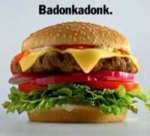
Awesome. A free Thickburger from Hardee’s is now on its way.
Now, just as Shankman didn’t send out his tweet expecting a free steak, neither did I send out mine expecting a free Thickburger. But I will graciously accept one as a token of Hardee’s appreciation for my past business and as acknowledgement for the many times I’ve been short-changed at their drive-through windows over the years, and just accepted it.
Our email exchange occurred four days ago. I’m not sure if Hardee’s is going to be mailing me a coupon for a free Thickburger, or actually delivering one to my home. But so far, neither has happened. If Hardee’s is planning the latter, I suppose I should tweet them my work address, since I likely won’t be home when they decide to show up.
Or maybe nothing will happen at all.

 Andy writes!