

Here we are in the middle of National Hispanic Heritage Month in the USA, and as promised in my earlier Friday Five that highlighted contemporary Hispanic authors you should read, today I’m sharing my picks for five “classic” novels by Hispanic writers.

1. Bless Me, Ultima, by Rudolfo Anaya. Published in 1972, Bless Me, Ultima, was a groundbreaking novel for its time as it dealt with themes of the Mexican-American experience. This coming-of-age novel recounts the relationship of a boy with his older siblings, parents, a mysterious curandera named Ultima, and his destiny: will he embrace the roaming, rancher lifestyle like his father’s family, or will he choose the path of his mother’s farming family? Anaya himself was born into these circumstances and draws on much of his own experience in that regard. Ayana is considered the godfather of the Chicano literature movement, primarily because of this novel.

2. Don Quixote, by Miguel de Cervantes. This is the book that started it all — not just for Hispanic literature, but in many ways for the development of the modern novel as construed by the Western world. Originally published in two parts and 10 years apart — in 1605 and 1615 — this novel, originally called The Ingenious Gentleman Don Quixote of La Mancha, is about a Spanish nobleman whose head is filled with fantasies of chivalry, decides to become a knight and sets out for adventure. I’ll admit that this book was a difficult one for me to get into; the early chapters were a bit of a slog. But as I dug in and discovered the humor inherent in this story of a delusional character who eventually comes to see the folly of his quest, the more I enjoyed it. Fun fact: this book gave use a couple of terms in common usage today: “tilting at windmills,” meaning to waste one’s time on fighting unimportant battles, and “quixotic,” which means to be foolishly impractical, especially in the pursuit of ideals. (Note: Some may think I’m cheating by including this novel on my list. But it’s important to understand that Hispanic and Latino/a/x/e are not the same. Hispanic is defined as anyone whose ancestry is from a Spanish-speaking country, while Latino/a/x/e is anyone whose ancestry is from a Latin American country, including Brazil, where Spanish is not the dominant language. Miguel de Cervantes certainly fits the former category. A good explainer about the difference can be found here.)

3. The Mambo Kings Play Songs of Love, by Oscar Hijuelos. This book came out in 1989 and won the Pulitzer Prize for Fiction in 1990, becoming the first novel by a U.S.-born Hispanic to win the coveted prize. Way to go, Oscar! (He was born in New York City to Cuban-born immigrant parents.) The novel is about two Cuban brothers who rose to fame during the mambo music craze of the 1950s, culminating in an appearance on the TV show I Love Lucy. (Readers of a certain age may remember that program.) The story is told from the perspective of one brother in his final hours of life as he reflects back on his life, from pre-Castro Cuba to immigration and adjusting to a new culture in the U.S. The book is divided into two parts, Side A and Side B. I think I read this book in the early 1990s, when there was a buzz about it. I should add it to my to-reread list.

4. One Hundred Years of Solitude, by Gabriel Garcia Marquez. Here’s a book that, like Don Quixote, transcends classification. It is a Great Novel, full stop. This novel, published in the 1960s, introduced much of the world to magical realism, a style that seems to permeate much of modern literature today (and not always effectively). One Hundred Years of Solitude tells the story of the rise and fall of a mythical town in the author’s native country, Colombia. The main actors in this tale are members of the Buendiá family. Now nearly 60 years old, the novel remains powerful and influential. The novel is, as The New York Times puts it, “An irresistible work of storytelling, mixing the magic of the fairy tale, the realistic detail of the domestic novel and the breadth of the family saga.” It also kicks off with an absolute banger lead sentence, one of the best in all of literature: Many years later, as he faced the firing squad, Colonel Aureliano Buendía was to remember that distant afternoon when his father took him to discover ice. How can you put down a book after reading a sentence like that?
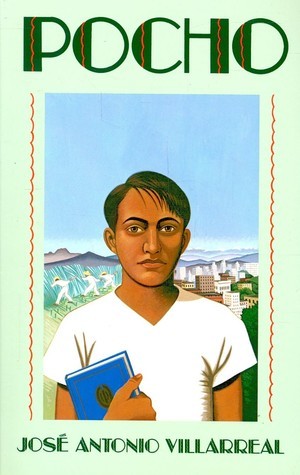
5. Pocho, by José Antonio Villarreal. Born in Los Angeles to Mexican migrant farm workers, Villarreal wrote the quintessential novel about the “pocho” experience as it was during the Great Depression and in the process created a novel that explores a phenomenon that has exploded since: the rise of Americans who have lost their cultural roots. Pocho‘s protagonist, Richard, is a young man who struggles with the “conflict between loyalty to the traditions of his family’s past and attraction to new ideas,” as the publisher describes the story on Amazon’s page. “Richard’s struggle to achieve adulthood as a young man influenced by two worlds reveals both the uniqueness of the Mexican-American experiences and its common ties with the struggles of all Americans — whatever their past.” First published in 1959, the same year America’s most famous pocho, Ritchie Valens, perished, it gained more popularity in the 1970s as the Chicano literature movement became more widespread.
As with any list, this one is incomplete. For example, it includes no works by Hispanic women writers. Although I have read the works of modern women Hispanic writers (four of the five included in my previous Hispanic Heritage post are women), unfortunately my knowledge of women Hispanic writers from the Chicano movement and earlier is woefully lacking. I would love to hear from readers about who else should be on this list. Have your say in the comments!
Image via The COM (College of Maryland) Library on Flickr.

 Andrew Careaga
2 thoughts on “Friday Five: great classic Hispanic novels”