
OCAD U’s new logo an open canvas

Most colleges and universities tend to be pretty restrictive when it comes to usage or alteration of their logos. But Toronto’s OCAD University just unveiled a new look that invites students to play around with it.
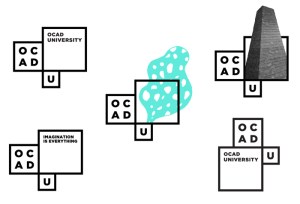
Mau-Icons

The icons shown above are examples of how the new OCAD U logo can become what Fast Company describes as a “mini art gallery” for the school’s art and design students. Created by Bruce Mau Design, the new logo’s largest frame is an open canvas. While the mark provides a nod to one of OCAD U’s most prominent buildings, the Sharpe Center for Design, “its primary purpose,” writes Fast Company’s Suzanne LaBarre, “is to show off students’ creative toils.” The school plans to invite its top students each year to contribute something from their portfolio to transform that open frame into logos for the following year.

It’s a risky approach, and one that could drive brand identity police nuts. But in this era of social media, when so many of us talk about how we don’t “control” the brand, we’ve still been pretty strict about allowing much flexibility with our organizations’ visual identities. Maybe it’s time we brand managers relinquish some control of the visual brand, too. OCAD U is leading the way.

Congratulations to Steve Virtue, OCAD U’s director of marketing and communications, who has been shepherding the design process since the university first announced its partnership with Bruce Mau Design last September.

Friday Five: Bubbles, branding, bosses, blogging

It’s the end of another long week. (You can always measure the length/busyness of my weeks by the number of blog posts. Zero posts since last week = busy, busy week.)

But I digress. It’s Friday. And that means it’s time to get all up in Friday’s face and get schooled with five pieces worth reading from the past week or so.

bubble1. Bubble, bubble, toil and trouble. Bob Brock of Educational Marketing Group adds his voice to the chorus talking about higher ed’s troubles. Could higher education in the U.S. suffer the same fate as the housing market of a few years ago, or the dot-coms of the early 2000s? “[A] menu of government subsidies have supported higher ed for decades, artificially mitigating free-market impact on tuition and enrollment,” Brock writes. “But these are unsustainable.” It’s an interesting read.

2. Bubble? What bubble? Meanwhile, FastCompany’s Anya Kamanetz (she of DIY U fame) sees no bubble for higher ed (except for the University of Phoenix). “A college degree, unlike a home, is nontransferable. It can’t be flipped. Nor can it be foreclosed on.”

3. Coke’s more expressive brand strategy. Joe Tripodi, Coca-Cola’s chief marketing officer, writes in Harvard Business Review about the big brand’s move toward a more expressionistic way of measuring engagement. Tripodi defines expressions as “any level of engagement with our brand content by a consumer or constituent. It could be a comment, a ‘like,’ uploading a photo or video or passing content onto their networks.” Tripodi’s ideas for why expressions matter should make an impression on higher ed marketers. (A thank you to @vedo for sharing this.)

4. A chancellor’s undercover episode bungled. The University of California, Riverside had a big moment in the spotlight last Sunday when its chancellor, Tim White, appeared on an episode of CBS’s “Undercover Boss.” If you didn’t get a chance to catch the show, Laura D. offers a not-so-rave review on her Marketing for Higher Ed blog. You can also read what the chancellor himself has to say about the experience.

5. Better blogging: tips from 3 biggies. At first, I wasn’t sure this Jeff Bullas post would have much value for small-time bloggers like me, since it focuses on three of the biggest, best-known blogs around. But some of the lessons listed at the end may be worth thinking about.

Photo: Blowing Bubbles by Steven | Alan.