
Books that matter: Karine Joly on ‘Content Everywhere’

And we’re back to our occasional series of books that matter for higher ed marketers. This one comes from Karine Joly of College Web Editor. Karine regularly posts 1-1-1 “express” book reviews on her website. If you don’t read her blog or follow her on Twitter (@karinejoly), you should.

Content Everywhere

Review by Karine Joly

content_everywhere-200x300I’ve read 9 books since the beginning of this year.

Reading non-fiction books is part of my work – although I get all my reading done in the evening or during the weekend.

While I don’t pretend to compete with Mark Greenfield when it comes to book reading, I always try to review the books that I found the most useful.

Yet, I know that people don’t have the time to read book reviews that are as long as book chapters. That’s why I came up with the 1-1-1 express format for these book reviews a few years ago.

Sara Wachter-Boettcher’s book, Content Everywhere, was the best book I read in 2012.

So, here is my 1-1-1 Express Book Review of Content Everywhere by Sara Wachter-Boettcher.

1 thing I liked

Sara didn’t write this book for higher education. Yet, she used many great higher ed examples: Arizona State University Online division, WVU, University of Notre Dame and Columbia University. So, when you try to convince your boss to move in the right direction following Sara’s advice, you won’t hear the traditional “it doesn’t apply to us in higher education.” It does, and the book makes it very clear with all these higher ed examples.

1 thing I didn’t like too much

I love everything in this book, but the 1-1-1 book review calls for a balanced view of my reading experience. So, here is what I didn’t like as much as the rest: the first part of the book – making the case for structured content strategy – felt a bit long to me (although it’s only 30 pages). I’ve been sold on the idea for some time now, so this is probably why I couldn’t wait to get to the newest part. But, I understand this section is targeted to people who might need more convincing.

1 big take-away from the book

The part on content modeling was the big take-away for me. With this book, I learned why it is important to structure content, but also how to do it through a proper analysis and by defining content types and content elements that make sense for my audience needs, my goals and my content.

Sara provides you with a clear road map and walk you through – every step of the way – which I really liked. For the Higher Ed Experts web redesigned project implemented last Fall, it led to the creation of several content types (courses, testimonials, faculty and institutions) that are called upon throughout the website depending on the audience needs. When your content is properly structured, it can be more powerful and flexible at the same time. So, this is definitely a great foundation for the future.

* * * * *

Sara Wachter-Boettcher will be one of the presenters in the Higher Ed Responsive Websites Summit, a three-day online event scheduled for April 23-25 and presented by Karine’s HigherEdExperts.com. Sara will present on April 25 on the topic “Analyzing Content, Empowering Authors: The Prerequisites for Responsive Design.” Karine also recently published an interview with her on the College Web Editor blog.
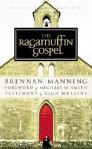
Off-topic: Brennan Manning & The Ragamuffin Gospel

“The story goes that a public sinner was excommunicated and forbidden entry to the church. He took his woes to God. ‘They won’t let me in, Lord, because I am a sinner.’

‘What are you complaining about?’ said God. ‘They won’t let Me in either.”

― Brennan Manning, The Ragamuffin Gospel: Good News for the Bedraggled, Beat-Up, and Burnt Out

ragamuffin.gospel.manning

On Saturday, one of my spiritual mentors passed from this world and on to whatever is next.

If the written words he left behind are true, then he is having a great time.

Brennan Manning died Saturday, April 13, 2013, at age 78. As a Franciscan priest who struggled with alcoholism, helped the poor and was voluntarily imprisoned. He later left the priesthood, married, later divorced, and wrote many books, including one that radically altered the way I think about God, Jesus of Nazareth, and many aspects of this life and what is to come after.

Manning’s The Ragamuffin Gospel: Good News for the Bedraggled, Beat-Up, and Burnt Out spoke to me in ways few books on religion and spirituality have, before or since I read it some years ago. I don’t even remember how I discovered the book or who first recommended it to me. All I know is that I’ve read it and re-read it, thumbed its pages randomly when seeking a reminder of grace and unfathomable, scandalous love. Over the years I’ve purchased many copies of this book and given them away to many, because I believe so firmly in Manning’s message. I searched the bookshelf for my copy this morning so I could grab a few quotes to share in this post. But I can’t find the book. I can only assume I’ve lent it to someone or given it away. So it’s time to buy a new copy. (Also, thanks to the Internet, I was able to find a few of the quotes that were most memorable to me.)

At first, I wasn’t sure I’d like Manning’s book. The title itself sounded too childish. A “ragamuffin”? To me, it conjures up images of a street urchin, some coal-faced guttersnipe straight out of a Charles Dickens novel. How on earth does an adult relate to a ragamuffin?

But I got past the title and read. And the message was spot on, and came to me during a time when I was wrestling with the idea of a loving God in a world where love and compassion seems all too scarce.

Manning’s message in The Ragamuffin Gospel is simple: God’s love is unquenchable, a lavish gift none of us deserves and no one individual or institution can contain. Nor can any collection of individuals or institutions contain that unconditional love. On page after page, Manning makes the case that no matter how undeserving of love we may think we are — no matter how unworthy we may feel — it is irrelevant. God’s love is greater than all of that. He also reminds us that no one, regardless of social status or moral piety, has a leg up on anyone else when it comes to gaining favor with God.

Because we are all ragamuffins. Some of us just have nicer clothes than others.

Manning’s writings have influenced many. They include another Christian author, Philip Yancey, and musicians Michael Card, Michael W. Smith and the late Rich Mullins, a musician whose  band was called “The Ragamuffin Band.” And several of my fellow believers also point to The Ragamuffin Gospel as a touchstone book in their spiritual journey.

Manning’s book is full of anecdotes that help to illustrate his point. Some are pulled straight from scripture, others from headlines or from his own rich and varied experiences, and still others from the pages of writers like Flannery O’Connor:

To the extent that we are self-made saints like the Pharisees or neutral like Pilate (never making the leap in trust), we let the prostitutes and publicans go first into the kingdom while we, in Flannery O’Connor’s unforgettable image, are in the background having our alleged virtue burnt out of us. The hookers and swindlers enter before us because they know they cannon save themselves, that they cannot make themselves presentable or lovable. They risked everything on Jesus and, knowing they didn’t have it all together, were not too proud to accept the handout of amazing grace.

He also throws in some anecdotes which may be apocryphal but are no less effective as object lessons about the power of grace. Such as this one about legendary New York City Mayor Fiorello LaGuardia (the authenticity of which Snopes questions):

One bitterly cold night in January of 1935, the mayor turned up at a night court that served the poorest ward of the city. LaGuardia dismissed the judge for the evening and took over the bench himself. Within a few minutes, a tattered old woman was bgrought before him, charged with stealing a loaf of bread. She told LaGuardia that her daughter’s husband had deserted her, her daughter was sick, and her two grandchildren were starving. But the shopkeeper, from whom the bread was stolen, refused to drop the charges. “It’s a bad neighborhood, your honor,” the man told the mayor. “She’s got to be punished to teach other people around here a lesson.”

LaGuardia sighed. He turned to the woman and said, “I’ve got to punish you. The law makes no exceptions — ten dollars or ten days in jail.” But even as he pronounced the sentence, the mayor was already reaching into his picket. He extracted a bill and tossed it into his famous sombrero, saying, “Here is the ten dollar fine, which I now remit; and furthermore I am going to fine every one in this courtroom fifty cents for living in a town where a person has to steal bread so that her grandchildren can eat. Mr. Bailiff, collect the fines and give them to the defendant.”

“What an extraordinary moment of grace for everyone present in that courtroom!” Manning wrote. “The grace of God operates at a profound level in the life of a loving person. Oh, that we would recognize God’s grace when it comes to us!”

If I were compiling a list of books that matter for life, The Ragamuffin Gospel would be right up there. (I did include it on my 2009 list of 15 memorable books.) Whether you believe God exists, or is anything like the God portrayed by any organized belief system, I believe Manning’s description of boundless love and grace are ideals worth striving for in our own lives. For me, it became easier to express grace, love and forgiveness toward others once I came to terms with the idea that I was loved, truly and unconditionally, by God.

As Manning says elsewhere, “How glorious the splendor of a human heart that trusts that it is loved!”