
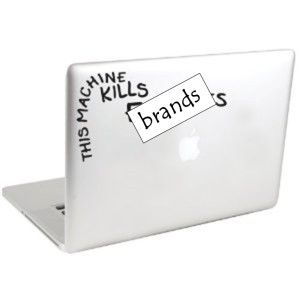
 Branding has been taking it on the chin lately from marketing pundits who claim it’s dead, or dying.
Is it time to stick a fork in branding? Is it as dead as that parrot from the Monty Python skit? Or is it just resting?
Before you stack branding alongside the supposedly rotting corpses of Facebook (dead to teens, at least), blogging, guest blogging for SEO (whose demise was curiously predicted three years after regular blogging was supposedly in the grave), web design and all of social media itself, you might want to consider these five perspectives on the death of branding:
1. Maybe it’s just the mega-brands that are dying. In a two-part essay for Forbes, contributor Robin Lewis makes the case that big brands are headed for a fall. Lewis points out in part one that most of the mega-brand behemoths were built during the “marketing century” of the 1900s but are ill-prepared for the “consumer century” we find ourselves in today. In part two, Lewis talks more about the power of consumers and their impact on traditional branding. “Discounting, the ‘race to the bottom,’ coupon and sale addiction … are parts of the equation that will kill the mega-brands,” he writes. I’m not sure I agree with it all, but his contention that brands should find niches rather than mass appeal does resonate with me. Soon, the mega-brands of higher education may be struggling with similar issues as Procter & Gamble, Nike and Cheerios.
2. Social media killed the brand. So says blogger Joey Sargent in a provocatively link-baitishly headlined blog post (“Is Social Media the Death of Branding?”). But Joey’s point isn’t that social media kills brands. It’s that brands need to figure out how to thrive in a social media-fueled consumer environment. “Brands that will succeed in the new era of marketing are the ones that leverage the golden opportunity presented by social media, taking advantage of the ready availability and easy access to customers that has never existed before.”
3. Brands aren’t dying, but brand loyalty is. To cite yet another Forbes piece about branding (jeez, those folks are obsessed with this topic!), Steve Olenski points out that consumers are becoming less loyal to brands than previous generations. (In an earlier article, he cited an Ernst & Young report indicating that just one-quarter of American consumers are brand loyal.) High-end retailers may be most at risk (will high-end universities follow suit?) but the growth of mobile for comparison shopping is also eroding brand loyalty, Olenski says.
4. Brands aren’t dying, but traditional branding tools are. Fifteen years ago, a book called Information Rules came out and propagated the view that “the power of brands would shrink as people had access to more and more free information,” say Jens Martin Skibsted and Rasmus Bech Hansen in a Harvard Business Review essay. “This has clearly turned out to be wrong,” they write, adding that “the exact opposite is true. As digital disrupts more marketplaces, brands become more important and more valuable.” What has changed is the traditional approach to branding as something separate from other business processes.
Part of the answer is in making the brand more — not less — central. In a hyper-transparent digital world, consumers instantly know the difference between what a company says and what it does. Organizations can no longer draw clear lines between marketing and product development, between communications and services. Brand builders must embed themselves across the customer value chain. [Emphasis added.] Products and services must be able to tell a story and communicate value without an extra advertising layer on top. As information is more and more available and the importance of brands increases, the ability to tell a meaningful story through actions and products, not words, is the only way to win.
5. Brands aren’t dying. Otherwise, why would Mashable be cranking out infographics like this one? Hokey infographic aside, the six points about getting people to love your brand should help keep it alive and well.
Bonus link: Guy Kawasaki on The Art of Branding. Good tips there.
 Andrew Careaga