

While I wait for the good folks at EduBlogs to send me the files from the previous version of Higher Ed Marketing, I thought I’d share this blast from the recent past: An interview with Steve Jones, author of Brand Like A Rock Star: Lessons From Rock’n’Roll to Make Your Business Famous.
Of all the branding, marketing and PR books I’ve read in 2012 (which, admittedly, is only a few), Brand Like A Rock Star is my favorite by far. And not just because it combines two of my passions — branding and rock’n’roll — but also because of Jones’ straightforward writing style, knack for storytelling and ability to draw lessons from the realm of music to the world of marketing. I highly recommend this book for any lover of marketing, branding and rock’n’roll. You can also follow Steve’s doings on his website, blog and on Twitter (@rockstarbrands). And for Kindle users, Amazon now offers Brand Like A Rock Star: The Musical Companion, a free chapter-by-chapter playlist.
1. You share a name with the Sex Pistols’ guitarist. Did your parents name you after that Steve Jones, or is that just a happy coincidence?
I would love to think that my parents musical tastes were that progressive, but that simply wouldn’t be true! I was also born in 1970, a few years before the Sex Pistols’ rise to fame. But even if I had been born at the height of the Sex Pistols’ fame, I doubt my parents would have known who Steve was. Their tastes were much more folk-oriented. Frankly, I am surprised I wasn’t named after Gordon Lightfoot or Roger Whittaker or someone like that!
2. What inspired you to write this book?
I’ve always been very interested in the human decision making process, and over the course of my 27 years in the radio industry I’ve studied it a great deal. Why does a listener choose one radio station over another, even though both are playing essentially the same songs? It comes down to branding. It comes down to an expectation. Fast forward a few years, and I was sitting on a patio sipping a beer and listening to Jimmy Buffett and the thought crossed my mind that he had built up an incredible brand using only one hit song, “Margaritaville”. I began to think about other rock stars hat did the same thing, like the Grateful Dead. And the concept was born! I immediately reserved the URL “Brand Like A Rock Star” and started blogging about the lessons that business can learn from rock and roll. Over the course of two years of blogging, the book evolved rather organically from there.
3. Of all the branding lessons in your book, which one do you think is the most important for marketers (of any or all sectors) to heed? And why?
There are two really. One is “Sell The Experience” and the other is “Different Beats Better.” The “experience” concept is simple: Stop selling/marketing/promoting the products you sell, and start talking about the experience that customers have when they interact with you. Great brands spend most of their marketing time (and money) talking about the experience. Think about Apple. Very, very seldom do you see Apple ads that talk about price points or even product features. They are masterful at marketing the experience. My favorite example is the iPhone ad that uses two deaf people communicating via Facetime. Very powerful.
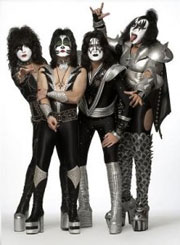
The “Different” concept is equally simple, yet seems to evade so many businesses. KISS proved it: You don’t need to strive to be dramatically better than the existing leader, you need to demonstrate that you are dramatically different. After all, what constitutes “better” differs from person to person. We all have our own view of what a “better” product looks like. But most of us can agree on what is “different.”
KISS was different when they came along, and you couldn’t help but to notice them. Lady Gaga does that today. You can’t avoid her. Are KISS and Lady Gaga the best examples of musical genius in our time? Probably not, to be fair. They are talented, but are they better than everyone else? On the other hand, nobody can dispute that they were both dramatically different.
4. Which takeaway from Brand Like a Rock Star do you think is most applicable to higher education?
Avoid trying to be all things to all people, and build a brand that someone will hate.
I think the higher education institutions that position themselves as “general” are becoming invisible, just like any business that attempts to please everyone eventually does. The schools (and brands) of the future that stand the best chance of success are the ones that stand for something. And when you stand for something, you are going to inevitably have people who dislike what you stand for. Accept that. In fact, celebrate it! If I’m a history buff, I am probably not going to choose MIT. Yet there is no doubt that I probably have an opinion on MIT and an understanding of what they are all about.
5. When you think of the most recognizable brands in higher education (i.e., the most recognizable colleges and universities), what comes to mind? And to which rock stars would you compare those brands?
That’s a cool question, and not an easy one to answer. I think the higher education brands that come to mind are the schools that stand for something, as I mentioned above.
If you wanted to draw some parallels between rock stars and recognizable colleges and universities, you could look to certain qualities and values. For example, Ivy League schools like Harvard and Yale are like Bruce Springsteen — almost royal in their nature, among the very first to ever exist, and likely to maintain their legendary status for many years to come. Liberal schools like Williams College, Amherst, or Claremont are the Bob Dylans of education, leaning heavily on issues, rigorously academic but socially inclusive, and often progressive in their thinking. Schools like MIT and Stanford are like Rush: Very nerdy, extremely intelligent, and uniquely and wonderfully complicated.
Although it is superficial, it is a fun way to look at brands — education or otherwise — and bands.
Bonus question (you know I have to ask this): What are the five albums you would take with you if you were stranded on a desert island?
In no particular order… and with “greatest hits” albums excluded…
- Exodus/Bob Marley
- Nevermind/Nirvana
- Born To Run/Bruce Springsteen
- Revolver/Beatles
- London Calling/The Clash

 Andrew Careaga