
During Greek Week on our campus this fall, our social media coordinator was on his way to cover another event when he saw some fraternity members dressed up in dinosaur costumes. Not an everyday occurrence, so he stopped to shoot some iPhone footage of the goings-on, then posted a 15-second clip of the frolicking frat boys in tyrannosaurus rex costumes on our Facebook page.
Category: Facebook
Facebook: The next big place for brand videos?
 According to a recent study by Socialbakers, video posts on Facebook now have the greatest reach of all types of posts. (And photos, once considered the best way to reach audiences on that social media platform, are eating video’s dust.)
So if you’re already annoyed by the number of videos cropping up in your Facebook timeline, brace yourselves. More video is coming. And marketers, obedient lemmings that we are, will quickly run to Facebook as the platform for sharing video.
What does this mean for YouTube?
Despite Facebook’s recent claim that it is the platform where the majority of videos are shared, this post makes a good argument in favor of YouTube reigning supreme in the online video world for some time to come. YouTube is the No. 2 search engine (after Google), its videos can be shared across many social platforms and it gives video uploaders a cut of ad revenue — all proof that YouTube is not dead yet.
Still, it will be interesting to see how the rise of video on Facebook will challenge YouTube and other more established platforms.
How is your organization using Facebook for video?
Facebook “like” image via PRDaily
Friday Five: A social St. Pat’s

For most of you who celebrate St. Patrick’s Day, the subject of this post may seem premature. But at the university where I work, students have honored the alleged patron saint of engineers for 105 years now, and their celebration begins long before March 17.
The annual St. Pat’s Celebration at Missouri S&T begins in early March with students using hand-carved walking sticks to drive snakes from campus to prepare the way for St. Pat (it’s okay; the snakes aren’t real), and wraps up this weekend with a knighting ceremony, big parade and a lot of parties.
Historically, St. Pat’s is one of the biggest social events for our campus. (It’s even been named one of the top 15 best St. Pat’s parties in the nation by BroBible. Yes, BroBible is apparently a thing.)
So it makes perfect sense that we should embrace social media to help connect students, alumni and others to this campus tradition. That’s why the Internet invented social media, right?
So here are five ways we use social media to help make the annual St. Pat’s celebration a great time for everyone involved.
1. Blogging

Way back in 2008, when our campus celebrated the 100th anniversary of our St. Pat’s celebration, we launched the Best Ever Blog as an attempt to connect far-flung alumni with the big centennial to-do.
We launched it in January 2008 to help build momentum for the anniversary and to have a little bit of fun along the way. Irreverence is a big part of the annual celebration, so it’s important that we have a human voice when we talk about St. Pat’s. It all begins with the blog. Also, the “voice” must extend beyond words. St. Pat’s is a very visual time of year — and very, very green — so we try to incorporate as much photography and video into the blog as we could.
2. Flickr
From the start, we pulled a lot of the images for that blog from a collection of St. Pat’s photos housed on our campus Flickr account. We still use Flickr to collect and organize the great shots taken by our campus photographer, but for those in-the-moment shots of events as they happen we’ve equipped several staffers with access to …
3. Instagram

To coincide with St. Pat’s Week (which began this past Monday), we launched our official university Instagram account, and boy has it been fun. The visual nature of the week’s events makes it ideal for smartphone coverage. Four of us attend events and snap pics with our cameraphones, while our real photographer weeps into the viewfinder of his professional-grade digital camera. (I think it’s a Nikon. But I don’t know for sure. All I know is it isn’t an iPhone.)
4. Twitter
Even before we launched the Best Ever Blog back in 2008, we were on Twitter. During St. Pat’s Week, our Twitter account (@MissouriSandT) is packed with St. Pat’s-related tweets and references. This year, thanks to Instagram, we posted many more photos to Twitter than in the past, and that expanded activity and reach. The student organization that puts on the annual event (@StPatsBoard) is also active on Twitter. And our students and alumni talk up the event with a variety of hashtags, including #StPats, #StPats2013, #BestEver, #RollaStPats and #105BestEver.
5. Facebook

Ah, yes. In terms of raw numbers, Facebook still rules. (But in terms of activity among our followers during St. Pat’s, Twitter wins.) During St. Pat’s, our Facebook site becomes more visual than during most other times of the year (as is the case with most of our social media). We change the cover photo to something frivilous. We get a lot of thumbs up and a few shares, even the occasional comment.
Bonus: Vine
This year, for the Wednesday arrival of St. Pat and his court to downtown Rolla, one of our staff members recorded the arrival and part of a walking stick presentation using the iPhone video app Vine. We tweeted the arrival Vine video and posted it on Facebook.
* * * * *
St. Pat’s is an unusual celebration that is distinctive to our campus. It’s also an annual event that gives us an opportunity to test and experiment with social media. this year, the experiment extended to Instagram, Vine and, although I didn’t talk about it here, even Pinterest. A year ago, Vine didn’t even exist, but we posted some videos on our YouTube channel. So next March, who knows what new social media toys or tools may be upon us? What will the 106th annual “Best Ever” have in store for social media?
Whatever it is, we’ll be sure to investigate some of them, and see whether they fit with the nature of our annual rite of (almost) spring.
Facebook’s Graph Search: Good news for #highered pages?
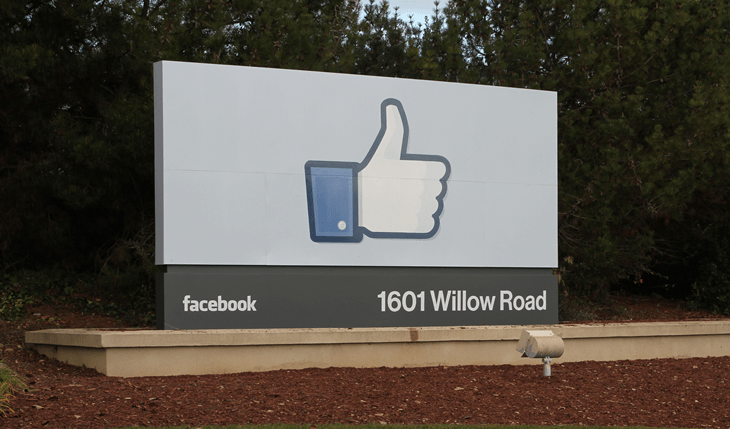 Facebook’s announcement on Tuesday of a new feature that lets users search for information that has been shared with them could be good news for college and university Facebook pages.
At the least, the new function should give us a reason to keep our Facebook sites updated with fresh content.
Called Graph Search, the new search feature was introduced Tuesday in limited preview, or beta. Facebook’s announcement of the tool notes: “If you have a Page on Facebook, Graph Search can make it easier for people to discover and learn more about your business.” PR Daily’s coverage of the news suggests that the more brands update their Facebook pages, the more likely their content will appear in a person’s Graph Search results.
“It appears Facebook is making a push to further encourage brands to invest in cultivating relationships with their fans online; the more popular the page, the more often it will show up in search,” writes PR Daily’s Michael Sebastian.
Perhaps most important — for all of us, not just brands — is that with this development, “Facebook finally has a search technology that works,” writes Adrian Covert in CNNMoney’s coverage of the announcement.
I haven’t had a chance to investigate Graph Search yet, but it sounds like it could help brands extend their reach within the Facebook universe. That is, if brands use the tool in the right way. Keeping content fresh and relevant on Facebook will be important. Those brands that ignore their Facebook content could find themselves ignored by users who Graph Search for information on their friends.
Off-topic: How to hide political posts on Facebook
 With the Republican National Convention now in our rear-view mirror and the Democratic National Convention about to convene, we political junkies are sating ourselves with the constant streams of information coming from all directions. But some of us may grow weary of the vitriol being tossed about on Facebook by those misinformed supporters of the wrong side in this election. The trouble is, many of those people are family members and actual friends and co-workers.
So what can you do? To unfriend them on Facebook because of their political leanings could lead to unintended consequences in real life.
Thanks to a browser extension Social Fixer for Facebook, you can effectively remove those posts from your Facebook news stream without endangering friendships. (Hat tip to Christopher S. Penn, who shared Social Fixer in a recent edition of his email newsletter. Visit his site to subscribe.)
Penn highly recommends this tool, and not only to sanitize your stream from political posts. “Take everything you don’t love about Facebooks, from sanctimonious holier-than-thou religious posts to the endless cesspool that is politics and quarantine or just obliterate it all.”
This blog post from Social Fixer explains how to set up your filter.
While installing the add-on, Penn suggests adding the following to the filtering string:
/politic|obama|romney|republican|democrat|conservative|liberal|election/
I doubt I’ll be using this add-on — at least not yet. I tend to enjoy the vitriol, and if you’re a friend of mine on Facebook, you may have noticed a posting or two in which I express my own political leanings. Philosophically, I prefer the messiness of political discourse, even though I realize how unlikely it is that I’ll ever change the views of those on the wrong side who are posting their own views, any more than they’ll change my views. Also, I tend to pay more attention to my Twitter stream than to Facebook. Twitter is just my preferred social media venue and platform.
Still, hearty discussion of politics is beneficial to the common good of a democratic society, right? We can learn from each other. We can reason together. Right? Right?