
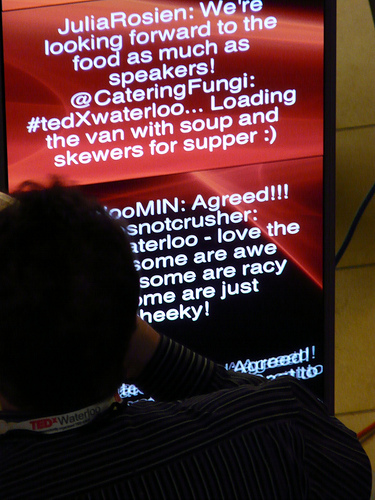
 I’m looking forward to getting together with many of my higher ed colleagues at the upcoming 2014 CASE District VI Conference. And I hope many of the conference-goers will use social media to document and share what they learn during the conference. (By the way, the official hashtag for the conference is #CASEVI.)
But as anyone who’s followed a conference from afar knows, the noise-to-signal ratio from conference attendees’s social accounts can be overwhelming. Sometimes, there’s a lot of non-valuable information floating along in the tweetstream from those events. The deluge of exhibition-hall selfies, name tag photos or humblebrags about schmoozing with a big-name speaker can become a turnoff to those watching back home. (I’ve been guilty of contributing to this tweetstream flotsam. Sometimes you just get caught up in the moment, as I did here.)
So for those tempted to regurgitate onto social media a conference’s every moment, higher ed writer Menachem Wecker (@mwecker) offers some advice on tweeting the right way. (Hat tip to John Lawlor for directing me to Wecker’s post.) Wecker talked to several in-the-know higher ed social media types to put together a good list of tips to cover a conference via social media. Here are a few of the main takeaways for me.
- Follow influentials, not just hashtags. Whether you’re tweeting from the conference or following along back at the office, find out who the main presenters are and follow the conversations that arise around their names and presentations. There are several ways to do this. Harvard’s Mike Petroff (@mikepetroff) suggests that conference-goers use HootSuite, TweetDeck or some similar app to set up a list around those names and Twitter handles. (To help navigate this year’s conference, I’ve created a list of presenters’ Twitter accounts to follow during #CASEVI. This doesn’t include every presenter; only those whose accounts I could readily find on Twitter.) While I like this approach, I think it’s still worth following a conference hashtag, because you could miss out on some great conversation or information otherwise.
- Share what you learn, not just where you are. Too often, conference-goers merely report or photograph where they are or what they’re doing, rather than what they are learning. Spend more time sharing what you’re getting out of the conference. And do your part to keep the conference hashtag as relevant as possible. Resist the temptation to append that hashtag to every photo or status update.
- Add value — and conversation. If a presenter references a study, a book or another resource that you think would be of value to your audience, take a minute to dig up the link and share it with your followers. Passing along advice from Michael Stoner (@mStonerblog), Wecker suggests “tweeting links to resources that the speaker mentions” or even “expressing disagreement with something the speaker says by offering links or other evidence.” In other words, get a conversation going, or contribute to one.
- Don’t just live-tweet — live-blog. If you’re a blogger, why not go beyond the live-tweeting and prepare some blog posts about your favorite sessions? Stoner recommends this, and I agree. The great thing about blog posts is that they persist long after the ephemeral cloud of conference tweets dissipates. One challenge with conference blogging, however, has to do with managing your time. If you’re involved in the planning and arrangements of a conference, as I am with this upcoming CASE event, your obligations often leave little time for consistent blogging. A better approach is to enlist a group of volunteers to divide and conquer by blogging specific topics or sessions on a site dedicated to the conference. This is the approach the HighEdWeb Association takes with its online journal Link. Check out the collection of session posts from the HighEdWeb 2013 conference for an example of how it works.

What other advice would you give to conference-goers who want to live-tweet a conference?
P.S. – If you plan to attend the conference, let us know! Mention the district’s official Twitter account, @CASEVI, in a tweet to let them know you’re on your way. (And don’t forget to include the #CASEVI hashtag.) You can also connect with others in the district through the CASE District VI LinkedIn group, and keep track of everything during the conference through a mobile app provided courtesy of Guidebook.
Top photo: TEDxWaterloo Tower of Tweets, by Patrick Dinnen (Flickr).
 Last March 1, a full two months into 2013, I stuck my neck out and made some
  Andrew Careaga