
Of brochures and bike racks

A long time ago, during my days as a newspaper reporter, one evening I struck up a conversation with a city administrator who was bemoaning one of the challenges of his office.

This conversation followed a city council meeting that had featured a spirited debate about the purchase of a new pickup truck for the public works department. The discussion devolved into a sharing of opinions on the merits of one brand or model of truck over another, or a third or fourth brand or model. The discussion had gotten out of hand, and the business of awarding the bid had taken much longer than it should have.

Embed from Getty Images

Earlier in the meeting, however, a motion to fund an upgrade to the city’s sewer system, at a cost well into the six figures, passed with little discussion and even less debate.

All of which caused the city administration to say something along the lines of: “We can spend a million dollars of taxpayer money on a sewer project without batting an eye. But when it comes to buying a truck, everybody’s an expert.”

I was reminded of this exchange recently while reading Avoiding The Bike Rack Effect in Meetings, by Tomasz Tungus. (Thanks to Beth Cudney for sharing a link to Tungus’ post via Twitter.)

Tungus’ “bike rack effect” operates on the same principle as my former city administrator friend’s “pickup effect.” City council discussions about bike rack purchases (in bicycle-friendly communities, anyway) bear a lot of resemblance to the truck discussion I related above. (The truck discussion occurred in a community that, at the time, was more pickup-friendly than bicycle-friendly. A bike rack debate, in those days and in that community, would never have occurred.)

“The bike rack … is tangible,” Tungus writes. “Each member has used a bike rack, and an opinion on which type is the best. In addition, the money at stake rests within a typical person’s spending. So, everyone involved wants to inject their point of view and derive satisfaction from having added value. The discussion drags on and the majority of the meeting time is spent on a relatively trivial topic.”

After reading the article, I shared Beth Cudney’s link myself and added that in our realm, this could be called “the brochure effect.”

Or it could be called the website effect. Everybody’s received a brochure, and everybody’s used the web, so everybody’s an expert and has an opinion on how to make one. So, whenever marketing of a major event is discussed in a meeting, you’re bound to get a lot of opinions from a lot of people who like to discuss what the brochure or website should look like because those communication vehicles, like the bike rack and the pickup, are tangible and familiar. There is discussion on font size, photography, logo placement, links, QR codes, everything but the communications goals. (I’m sure event planners have their own version. There’s probably the “menu effect,” because everybody knows which vegetable goes best with which main course, or which wines pair best with lamb, etc. And fundraisers probably deal with the “scholarship effect,” because so many potential donors received scholarships or had children who did or didn’t.)

Trying to steer meeting participants toward discussing actual communication, branding or marketing goals and strategies can be a lot like getting the city council to discuss a multi-million dollar power plant or six-figure sewer system. These ideas are too complex or too large in scope to grasp.

It’s hard work trying to define an audience and the objectives of communications to that audience. But, to stretch the sewer system analogy too far, without a communications strategy to channel all of that effort, you could end up with a big mess.
Friday Five: Branding: Dead or alive?

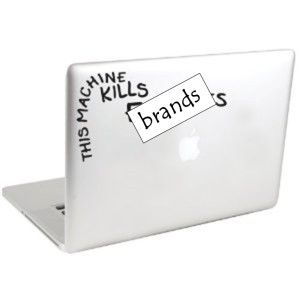
MachineKillsBrandsBranding has been taking it on the chin lately from marketing pundits who claim it’s dead, or dying.

Is it time to stick a fork in branding? Is it as dead as that parrot from the Monty Python skit? Or is it just resting?

Before you stack branding alongside the supposedly rotting corpses of Facebook (dead to teens, at least), blogging, guest blogging for SEO (whose demise was curiously predicted three years after regular blogging was supposedly in the grave), web design and all of social media itself, you might want to consider these five perspectives on the death of branding:

1. Maybe it’s just the mega-brands that are dying. In a two-part essay for Forbes, contributor Robin Lewis makes the case that big brands are headed for a fall. Lewis points out in part one that most of the mega-brand behemoths were built during the “marketing century” of the 1900s but are ill-prepared for the “consumer century” we find ourselves in today. In part two, Lewis talks more about the power of consumers and their impact on traditional branding. “Discounting, the ‘race to the bottom,’ coupon and sale addiction … are parts of the equation that will kill the mega-brands,” he writes. I’m not sure I agree with it all, but his contention that brands should find niches rather than mass appeal does resonate with me. Soon, the mega-brands of higher education may be struggling with similar issues as Procter & Gamble, Nike and Cheerios.

2. Social media killed the brand. So says blogger Joey Sargent in a provocatively link-baitishly headlined blog post (“Is Social Media the Death of Branding?”). But Joey’s point isn’t that social media kills brands. It’s that brands need to figure out how to thrive in a social media-fueled consumer environment. “Brands that will succeed in the new era of marketing are the ones that leverage the golden opportunity presented by social media, taking advantage of the ready availability and easy access to customers that has never existed before.”

3. Brands aren’t dying, but brand loyalty is. To cite yet another Forbes piece about branding (jeez, those folks are obsessed with this topic!), Steve Olenski points out that consumers are becoming less loyal to brands than previous generations. (In an earlier article, he cited an Ernst & Young report indicating that just one-quarter of American consumers are brand loyal.) High-end retailers may be most at risk (will high-end universities follow suit?) but the growth of mobile for comparison shopping is also eroding brand loyalty, Olenski says.

4. Brands aren’t dying, but traditional branding tools are. Fifteen years ago, a book called Information Rules came out and propagated the view that “the power of brands would shrink as people had access to more and more free information,” say Jens Martin Skibsted and Rasmus Bech Hansen in a Harvard Business Review essay. “This has clearly turned out to be wrong,” they write, adding that “the exact opposite is true. As digital disrupts more marketplaces, brands become more important and more valuable.” What has changed is the traditional approach to branding as something separate from other business processes.

Part of the answer is in making the brand more — not less — central. In a hyper-transparent digital world, consumers instantly know the difference between what a company says and what it does. Organizations can no longer draw clear lines between marketing and product development, between communications and services. Brand builders must embed themselves across the customer value chain. [Emphasis added.] Products and services must be able to tell a story and communicate value without an extra advertising layer on top. As information is more and more available and the importance of brands increases, the ability to tell a meaningful story through actions and products, not words, is the only way to win.

5. Brands aren’t dying. Otherwise, why would Mashable be cranking out infographics like this one? Hokey infographic aside, the six points about getting people to love your brand should help keep it alive and well.

Bonus link: Guy Kawasaki on The Art of Branding. Good tips there.