
Meet the new boss. Same as the old boss. – The Who
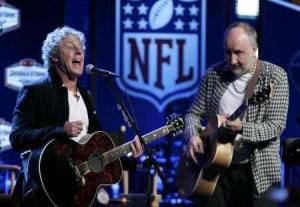 As the modern-day version of the Who wrapped up their 12-minute halftime set during Super Bowl XLIV on Sunday — as Pete Townsend windmilled his way through the final power chords of “Won’t Get Fooled Again,” the Who’s greatest and most significant power ballad — my thoughts turned to the relevance of that song, nearly 40 years after its release. It’s a song about hope and disillusion, the realities of politics, of selling and marketing, and is full of insight into the human condition.
In many ways, “Won’t Get Fooled Again” was the precursor to the punk movement, for it lashed out — more eloquently than punk — against the powers that be and, like the best punk songs, seethed with rage but did not resolve the questions it raised, and simply flamed out magnificently. (If you’re unfamiliar with this song or need a refresher, I suggest you watch this video of Pete Townsend’s solo acoustic performance.)
Anyway, thinking about that tune led me to ponder the state of the things we love, or think we love, in our world, and how we cheer for the upstarts and sing praises when they triumph.
That is, until they fall into the same patterns of their predecessors.
Some of this arises from pure hubris. The upstart wins, then gets cocky, then complacent, and then the upstart new boss is no different than the old boss. Other times, it seems, the upstart simply cannot shake the system.
Here are three examples of what I’m talking about:
Meet the new Toyota, same as the old GM. Oh, how we loved to slam General Motors for the shoddy quality of its cars. And oh, how Toyota basked in the reputation it built for great quality. But now, Toyota, which usurped GM’s position as the world’s top auto manufacturer just a year ago, has reputation problems of its own. Toyota has just announced a recall of 400,000 hybrid vehicles, including the hybrid from its luxury Lexus line. The green halo around the company has slipped, and thousands of customers who bought into the company’s line about reliability and environmental concern are not happy about the situation, or Toyota’s ham-handed approach to damage control.
Meet the new Google, same as the old Microsoft. Remember when everybody loved Google? Remember how everybody used to make fun of Microsoft, Yahoo and those other search engine also-rans that kept trying to compete with Google in the search engine niche? Well, now Google is planning to announce new Gmail features that the company hopes will compete with social media sites like Facebook and Twitter. So, Google, which built a niche and a reputation for search, is now broadening its reach and trying to compete in the social media arena. Just as Microsoft was late to the search game, so it seems Google has been slow getting into a social media arena that is rapidly changing. It’ll be interesting to see how this goes.
Meet the new Obama, same as the old Carter. No, I’m not an Obama hater. I voted for him, and I fully support him. But should anyone be surprised that he’s caught up in the gridlock of D.C. politics? Should we be amazed that there is opposition to the president’s ambitious and far-reaching agenda? He’s dealing with a Congress full of Eisenhower Republicans (and that’s the majority — i.e., the Democrats) and divisive right-wingers. But we expect far too much from the POTUS. As I wrote here the day after Obama’s victory, “[T]he future of our nation does not rest on Obama’s shoulders. It rests on ours. Those of us in the business of higher education play an important role in our nation’s future. In my lifetime, it’s never been more critical. The higher education system in the United States is still a beacon for the world. In the next four years, my hope is that our nation will invest in rebuilding our schools, rebuilding our roads, bridges and buildings, and creating a green economy that can thrive and be the leader for the rest of the world. But that job is not up to the politicians alone. It’s up to all of us. Let’s do our part.”
And so, my friends, let’s smile and grin at the change all around us, pick up our guitars and play, just like yesterday, and then get on our knees and pray, we don’t get fooled again.
Of course, we know we will get fooled again.
* Headline idea stolen and adapted from a chapter title of Dan Kennedy’s book, Rock On: An Office Power Ballad.
 Andrew Careaga