
Radio plays have been around for a century or more, practically since the advent of radio. They thrived during the 1930s, ’40s, and ’50s–an era sometimes called the Golden Age of Radio. In his latest novel, Count the Dust (LEFTOVER Books, December 2025), writer and literary magazine editor Adam Van Winkle taps into that approach to create a distinctive story designed for radio but equally enjoyable as a good read.
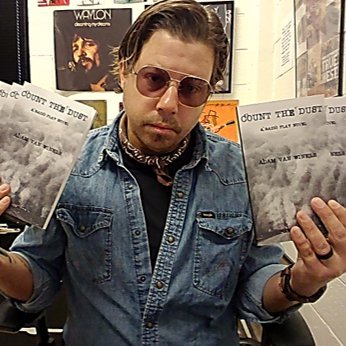
Count the Dust is set in a nameless small town in southern Oklahoma or north Texas. It’s modeled after the place where Adam grew up, Texoma, but, as he writes, it could be any of the “many small Oklahoma and Texas towns I’ve been in and through that center around a filling station on a state highway.” It’s a murder mystery, told over two time periods–1967, the year of the murder, and 1997–as well as a story of “the persistence of offspring in unideal circumstances.”
Continue reading “Friday Five: Cowboy Jamboree’s Adam Van Winkle, author of ‘Count the Dust’”“These places, like places I grew up in and around, with little money, little resources, drugs, guns, violence, strained marriages and poisonous relationships, they still find a way to produce progeny. People still meet through the circumstance of life, new people still get born.”
 Andrew Careaga