It’s been a long slog of a week, so I’ll be practically twitteresque in my introduction today. Here are five short but sweet and thought-provoking posts for your quick reading:
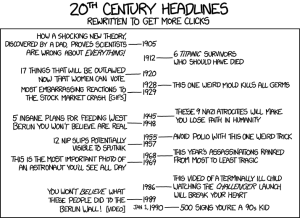
If 20th century headlines were rewritten to get more clicks (xkcd). Click (heh) to see original.
Today’s Friday Five is an experiment in blogging, social media and click-baiting. And if you read only this opening paragraph, you’ve taken part.
I hope you’ll read on, though. Because it gets better.
See that headline up there? That’s a departure from the usual Friday Five headline style I’ve been using on this blog since Friday Five became a thing. The usual Friday Five headline would begin with “Friday Five” and (usually) all fit on a single line. It would look something like this:
Friday Five: Draw readers to your blog
But for the sake of this experiment, I’ve tweaked the formula. I designed the headline for this post in a manner that has become the standard for many news-ish websites these days.
(Before I continue, I should mention that earlier this week, Georgy Cohen wrote a terrific post about the elements of headline style for this brave new online world. Unlike a lot of the click-baitish stuff that passes for news these days, Georgy’s post — We Blog About Headlines. What Comes Next Will Amaze You. — is worthwhile reading. You should check it out. She eloquently wove together many of the same thoughts I’ve been having about the creation of sharable, clickable headlines.)
Since Georgy has explored this topic already (as have manymanyothers), it’s not like I’m breaking new ground here. (But what’s new? As this recent New Yorker piece points out, even Aristotle pondered what would make an idea go viral.) But it’s a topic worth revisiting, because the click-bait headline is quickly becoming a mainstay in the news industry, where clicks on headlines (or clever variations in social media) translate into advertising dollars.
Those of us in higher ed marketing may not be too worried about generating revenue, but we could learn a lesson or two from the click-bait artists if we want to do a better job of sharing our content and spreading our message. We just have to be careful how we do it. As Georgy points out in her post, a headline “has a lot of responsibilities.” We need to think carefully about how we use them.
So, as promised, here are five proven, mind-blowing ways to get people to read your blog — or at least click on your headline:
1. Over-promise
Click-baity headines tend to over-promise and under-deliver. They promise to blow our minds with new knowledge or insights, or let us in on some amazing secret. The headline for this post is probably no exception.
I wouldn’t recommend over-promising in any of your headines.
The number strategy would work well for higher ed marketing. It’s worked well for us when we’ve used it on occasion. Just don’t over-promise (see No. 1, above).
3. Ask an absurd question
The answer to which is almost always “No.” This is known as Betteridge’s Law.
If the answer to your absurd question is “No,” you might reconsider re-writing your headline.
4. Explain something
This is the first rule of writing sticky headlines, according to this profanity-laced post (you have been warned). Sharing the “how” or the “why” of something may pique a reader’s curiosity. Instead of explaining the “what” of a story in your headline, think about the “how” or the “why.”
Maybe a slight twist in the headline would lead to more clicks.
5. Modify it
Adding modifiers to headlines seems to be a common approach, too. Say you have a number to include in your headline. Say you think 5 ways to get people to read your blog is a pretty good, sticky headline. But what if you added a couple of adjectives into the mix? Would that improve things?
For this experiment, the result was:
5 proven, mind-blowing ways to get people to read your blog
Better? Maybe. Baitier? Definitely.
6. Bonus, mind-blowing secret!
Are you ready for the truly mind-blowing secret? Brace yourselves.
None of this is new!
That’s right. All of these techniques were in use years before the arrival of the Internet, Upworthy or Twitter. Years ago, in the pre-Internet era, I heard Don Ranly, a retired journalism professor from my alma mater, talk about “refrigerator journalism” many years ago to refer to how-to stories, lists and other easy-to-read articles you’d want to cut out of a publication to post to your refrigerator.
This approach to writing headlines is alive and well on newsstands today.
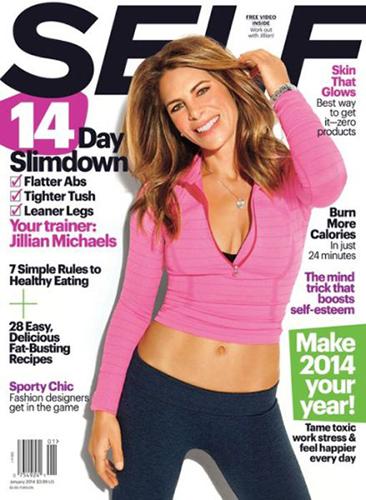
Take a look at Woman’s World, Cosmo, Self or any of the other magazines in the checkout line at your local grocery store or Walmart, and you’ll find plenty of examples.
So, that’s it. Those are the mind-blowing ways to get people to read your blog. Maybe.

 Andy writes!