Friday Five: the year in books

My annual list of favorites.

I’ve consumed (read and/or listened to) a lot of books (for me) this year, and I’m still reading some newer releases, but I think I’ve read enough to come up with my at-the-moment year-end list. So, here goes.

Disclaimer: this is not a “best-of” list. I’m not smart enough to declare what is best for anyone but myself. So here you’ll see favorites and least favorites.

1. Favorite novels published in 2025

My Documents, by Kevin Nguyen. Who doesn’t love a good dystopian novel? Especially when the “it can’t happen here” vibe is ripped away and you realize the story line is only a few degrees separated by our current reality in the USA. My Documents is the story of four Vietnamese American siblings and cousins who become caught up in a political movement to detain Viets in the wake of a series of terrorist attacks. The story echoes the World War II internment of Japanese Americans after the bombing of Pearl Harbor, but within the contemporary of American politics and surveillance society. My Documents is Nguyen’s second novel. He also is features editor of The Verge.

Other favorites published in 2025:

  • The Antidote, by Karen Russell.
  • Vera, or Faith, by Gary Shteyngart.
  • Dream Count, by Chamananda Ngozi Adichie.
  • All Our Tomorrows, by Amy DeBellis.

2. Favorite nonfiction published in 2025

Burning Down the House: Talking Heads and the New York Scene That Transformed Rock, by Jonathan Gould. A thorough and engaging history of one of my favorite bands, written by a music historian and former pro musician who knows his stuff. The book begins with Talking Heads’ 1975 debut performance at the legendary New York City club CBGB but rewinds to the formative years of the band’s four members before taking us on a fascinating journey of their career, along with deep dives into the personalities and conflicts, especially between front man David Byrne and husband-wife drummer and bassist Chris Franz and Tina Weymouth. The only drawback, in my opinion, is that Gould was unable to interview any of the band members. But he makes up for that with meticulous and well-sourced research.

Other nonfiction favorites published in 2025:

  • Mark Twain, by Ron Chernow.
  • More Than Words: How to Think About Writing in the Age of AI, by John Warner.
  • Our Lives in Pieces, by Tracie Adams.

3. Favorite short-story collections published in 2025

Beyond the usual anthologies, I only read two short-story collections that were published in 2025, and I loved them both. So consider this a two-way tie between Night Watch, by Mathew Goldberg, and All and Then None of You, by Melissa Flores Anderson. Both of these books are debut collections, and both authors’ voices shine through their work as original and refreshing.

Goldberg’s Night Watch is a collection of haunting and lyrical stories that address alienation, disconnection, and longing in a range of settings, from suburbia to corporate America. The collection, which won the Spokane Prize for Short Fiction, also “weaves together lives on the edge of transformation, where moments of quiet observation erupt into revelations,” as the promotional copy puts it, not wrongly.

All and Then None of You is a road trip book through the rural areas of Flores Anderson’s native state of California, with a few detours here and there, including one study-abroad trip to Dublin. Each story also includes a QR code to an accompanying soundtrack, which is a cool feature.

4. Favorite novels published before 2025

Most of these were written in the past few years, but I hadn’t gotten around to reading them.

  • There Are Rivers in the Sky, by Elif Shafak.
  • The Lincoln Highway, by Amor Towles.
  • Night Watch, by Jayne Ann Phillips.
  • The Ask, by Sam Lipsyte.
  • The Corrections, Jonathan Franzen.

5. Guiltiest pleasure of 2025

Circle of Days, by Ken Follett. I’ve been a sucker for much of Follett’s writing since The Pillars of the Earth came out. Unlike Pillars and most of his other historical fiction, however, Circle of Days is pre-historical. It’s the story of how Stonehenge came to be, but it’s far more than that, of course, with rivalries among tribes and within families and all the stuff Follett is known for. I don’t really feel too guilty about reading Follett, but in this case I feel guilty about falling victim to the marketing, because this book was not as good as his previous works. But kudos to him for taking a risk and imagining a world before recorded history.

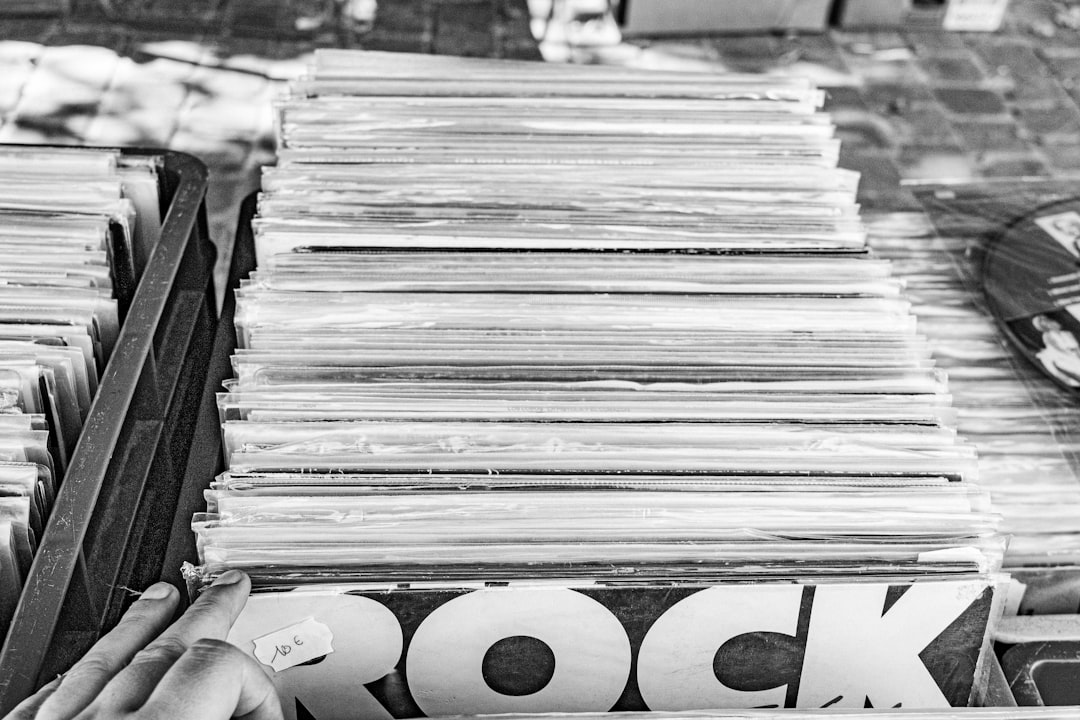
Image via Pexels.

Library book sale haul

Eleven books for twelve dollars. Money well spent.

Last month, I went to the Rolla (Missouri) Public Library’s fall book sale and came home with a nice haul of reading materials. It was $12 well spent, and the money went to support our local library.

Here’s what I got, and what I hope to read over the holidays and beyond:

  • Good Poems, selected and introduced by Garrison Keillor. Published in 2002, this collection consists of poems Keillor read on his popular public radio program The Writer’s Almanac, which I listened to faithfully until Minnesota Public Radio pulled the plug on it due to allegations against Keillor of “inappropriate behavior.” Perhaps my knowledge of these and later allegations should have dissuaded me from shelling out a buck to purchase this collection, but the poetry within these pages are fantastic. I love a book that I can open to at random and discover wonderful writing, and that is the case with Good Poems.
  • Where the Crawdads Sing, by Delia Owens. I think I’m one of the few readers in the world who haven’t read this best-selling coming-of-age novel/murder mystery. But what fascinates me most about this novel is not the theme, but the fact that the author wrote it when she was 69 years old. This gives me, a mere 65-year-old, hope that I can still write something of value, even if it doesn’t become a best-seller. (Owens, like Keillor, is also the subject of some controversy, as questions have arisen about her and her husband’s connection to the real-life death of a person in Zambia when the couple lived in Africa.
  • The Imitation of Christ, by Thomas à Kempis. It never hurts to read something of a religious or spiritual nature now and then, and I figure this popular devotional, which looks like a quick read, might provide some spiritual nourishment for my soul (even if I am not Catholic).
  • Death Comes for the Archbishop, by Willa Cather. I have never read a Willa Cather novel, so now that this one is in my possession, I have no excuse. (I also have a copy of O, Pioneers, have had it for ages, and haven’t read it, either. Shame! Shame!)
  • Living by the Word, by Alice Walker. A collection of essays written between 1973 and 1987 by Walker, who is best known for her Pulitzer Prize-winning novel The Color Purple. I’ve read several of her short pieces–essays, mostly–so I’m looking forward to reading more.
  • Selected Stories, by Alice Munro. Hooboy. Here we go with another controversial writer. I wrote glowingly about Munro soon after her death last May, citing and reveling in her ability to achieve success as a writer by focusing only on the short story. That was before the news broke a few months later about how Munro kept quiet about–was complicit in, even–her husband’s repeated sexual abuses of their daughter. Turns out one of the most celebrated Canadian short story writers was really an art monster. Will that keep literature instructors from teaching her works? Will that keep others from reading her works? I plan to read at least some of these short stories, but with a new context brought about by the revelations of her family situation.
  • A Room of One’s Own, by Virginia Woolf. Another gaping hole in my literary life that I hope to fill.
  • The Dean’s December, by Saul Bellow. This novel came out while I was still in college. I always meant to read it but never did. Now that I’m out of academia, and now that the book is over 40 years old, it will be interesting to see how well it reflects the modern academic administrative experience, if at all. But mainly, I picked it up hoping for a good, shortish novel.
  • The Things They Carried, by Tim O’Brien. The title short story of this collection is one of the best I’ve ever read. I once owned this collection but lent it to someone years ago. If you whom I lent it to are reading this, go ahead and keep that copy, or hand it off to someone else. I have my own copy now, and I plan to hang on to it.
  • The Complete Stories, by Flannery O’Connor. I have somewhere on my bookshelf a beaten-up, worn-out copy of one of O’Connor’s two short story collections, A Good Man Is Hard to Find, combined with her two novels, Wise Blood and The Violent Bear It Away, but not the other short story collection, Everything That Rises Must Converge. Now that I have The Complete Stories, my itch for O’Connor stories will be satisfactorily scratched.
  • Purity, by Jonathan Franzen. I don’t know much about this novel. Or anything, really, But I’ve enjoyed the other two Franzen books I’ve read (Crossroads and The Corrections), so I thought, why not give this one a spin?

So there you have it: a little poetry, some short stories, some novels, some essays, controversial writers–a nice well-rounded haul for $12. Definitely money well spent.

And now, for the time to spend reading this wealth of literature.